Energy Savings from Insulation in West Texas
Real DOE and ENERGY STAR data on how much proper insulation and air sealing actually save — and what it means for homes in Seminole, Andrews, Lubbock, Midland, and Odessa.
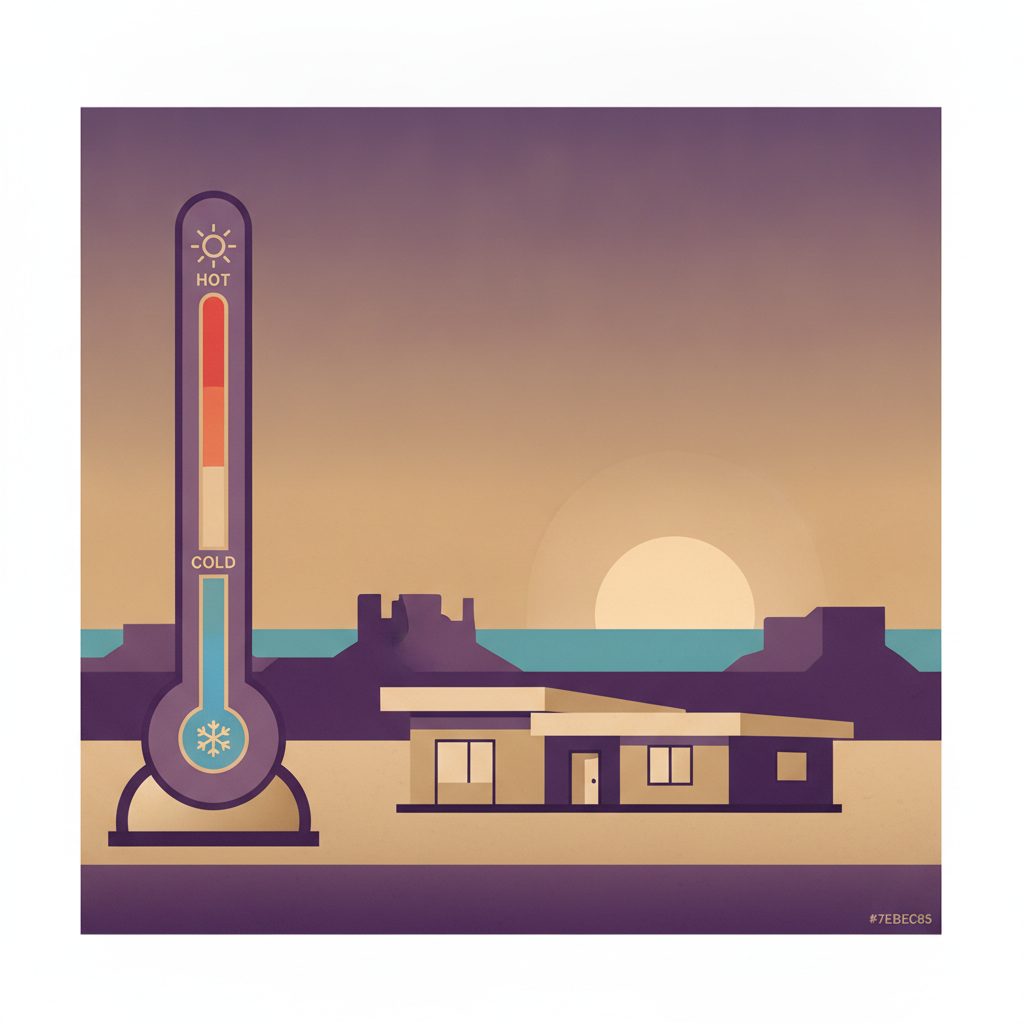
If you've watched your electric bill climb every summer and wondered why your house never quite feels comfortable no matter how hard the air conditioner runs, the answer usually isn't your HVAC system. It's your building envelope. Energy savings from insulation is one of the highest-return, lowest-hassle upgrades a West Texas homeowner can make — but only when it's done right, and only when it's paired with proper air sealing.
Seminole, Andrews, Lubbock, Midland, Odessa, and the rest of the Permian Basin sit in a punishing climate for a home's envelope: summer highs regularly break the mid-90s (with 2024 setting a new Texas state record of 116°F), while winter nights can drop into the high 20s. That's a swing of well over 60 degrees across the calendar year — and often a 25–30°F swing within a single 24-hour day, because West Texas' dry air and clear skies let heat escape fast at night and build up fast during the day. Every one of those temperature swings puts stress on your attic, walls, and ductwork, and every degree your HVAC system has to fight is a degree that costs you money.
This article walks through what the U.S. Department of Energy and ENERGY STAR actually say about insulation's energy savings potential (not marketing exaggerations), what R-value really means for a West Texas home, why air sealing is the piece most homeowners miss, and what a realistic payback timeline looks like for spray foam versus traditional insulation in this specific climate.
Key Takeaways
- ENERGY STAR: up to 15% heating/cooling savings; DOE: up to 20% — from combined air sealing + insulation, not insulation alone.
- Air leakage alone accounts for 25–40% of a home's heating/cooling energy use — independent of your attic's R-value.
- Seminole/West Texas sits in IECC Climate Zone 3B: R-38 attic, R-13 walls minimum — many older homes fall short.
- Closed-cell spray foam (R-6–7/inch) seals air leaks AND insulates in one step — batts only do the latter.
- Typical envelope-upgrade payback: 5–10 years, with spray foam continuing to save for 50+ years after.
How Much Can Insulation Really Save You?
Let's start with the number everyone wants: how much money are we actually talking about?
According to the ENERGY STAR Seal and Insulate program guidance and ENERGY STAR's Why Seal and Insulate page, homeowners who properly seal air leaks and add insulation to recommended levels can save an average of 11% on total energy costs, and up to 15% specifically on heating and cooling costs. The U.S. Department of Energy's own Guide to Home Insulation puts the ceiling even higher — up to 20% savings on heating and cooling costs when a home is properly air-sealed and insulated to current recommended levels.
These aren't marketing numbers from a spray foam company. They're the federal government's own published figures, and they matter because they're conservative and defensible — not the "cut your bill in half" claims you'll see scattered across contractor blogs. We'd rather tell you the real range than the flashy one.
Here's why the range varies: ENERGY STAR's own savings methodology explicitly notes that colder and hotter extreme climate zones see the highest percentage gains — homes in mild climates might only see 5–7% savings, while homes in climate zones with heavy heating or cooling loads (like West Texas' Zone 3B) tend to land at the higher end of that 11–20% range, simply because there's more energy being spent fighting the outdoor temperature in the first place.
There's a second number that matters just as much as the insulation figure: air leakage alone accounts for 25–40% of the energy used for heating and cooling a typical home. That's according to ENERGY STAR's own building science research. In other words, a huge share of what you're paying for climate control every month is quite literally escaping through gaps you can't see — around can lights, top plates, duct chases, attic hatches, and rim joists. We'll come back to why that matters more in West Texas than almost anywhere else.
Documented Energy Savings by Source (combined air-sealing + insulation)
The takeawayThe 11–20% figures above describe combined air sealing plus insulation upgrades — not insulation in isolation. If you insulate without addressing air leakage, you leave real savings on the table. That distinction shapes everything else in this article.
Understanding R-Value — The Key to Energy Savings
R-value is the standard measurement of a material's resistance to heat flow — how well it slows down heat trying to move through it. The formula is simple (R = thickness ÷ thermal conductivity), but the practical takeaway is simpler still: higher R-value means better insulating performance, and R-value scales roughly with thickness, which is why the type of insulation material matters enormously in a tight wall cavity where you only have a few inches to work with.
Heat moves through your home's envelope three ways: conduction (heat passing directly through solid materials like studs and drywall), convection (heat carried by moving air — the air currents inside a wall cavity, and air leaking in and out through cracks), and radiation (infrared heat radiating off your roof deck after a day of direct West Texas sun). Traditional insulation — fiberglass batts, blown cellulose — only addresses the first mechanism, conduction. It does very little to stop air movement unless it also forms a continuous air barrier, which loose-fill and friction-fit batt products generally don't.
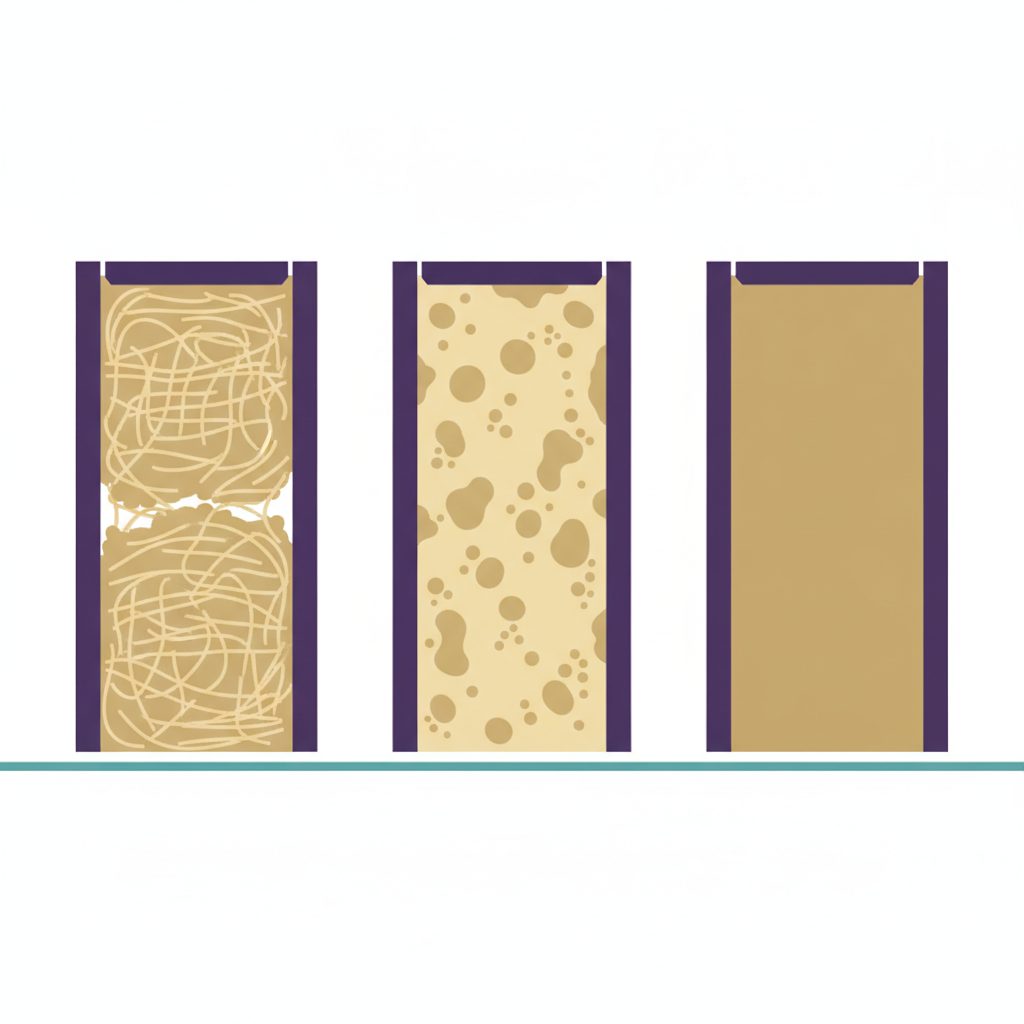
R-Value per Inch by Material
Closed-cell spray foam runs roughly double the R-value per inch of open-cell foam, according to Johns Manville's open-cell vs. closed-cell comparison, and its denser, rigid structure forms both an air barrier and a vapor barrier at a fraction of the thickness fiberglass would need to hit the same R-value.
For code minimums, the 2021 IECC assembly reference for Climate Zone 3B — the zone that covers Seminole, Andrews, Lubbock, Midland, and Odessa — sets these baseline requirements:
| Assembly | Minimum R-value (Zone 3B) |
|---|---|
| Attic / ceiling | R-38 (R-49 preferred with raised-heel trusses) |
| Exterior walls | R-13 (2x4 cavity) |
| Floors over unconditioned space | R-13 |
A lot of older housing stock in this region was built under earlier, less stringent codes — or before formal energy code enforcement reached smaller West Texas towns at all. If your home was built more than 15–20 years ago and hasn't been re-insulated since, there's a real chance it doesn't meet even the current minimum standard for this climate zone, let alone the higher levels that deliver the best savings. Our spray foam insulation services are built around bringing homes up past that Zone 3B baseline, not just to it.
Why West Texas' Climate Makes Insulation Non-Negotiable
Seminole and the surrounding Permian Basin fall in IECC Climate Zone 3B — classified as warm/hot and dry, with a cooling-dominated demand profile. Zone 3B typically logs 4,500–6,300 cooling degree days, meaning the air conditioner isn't just running through a few peak weeks of summer — it's under sustained, heavy load across most of the year.
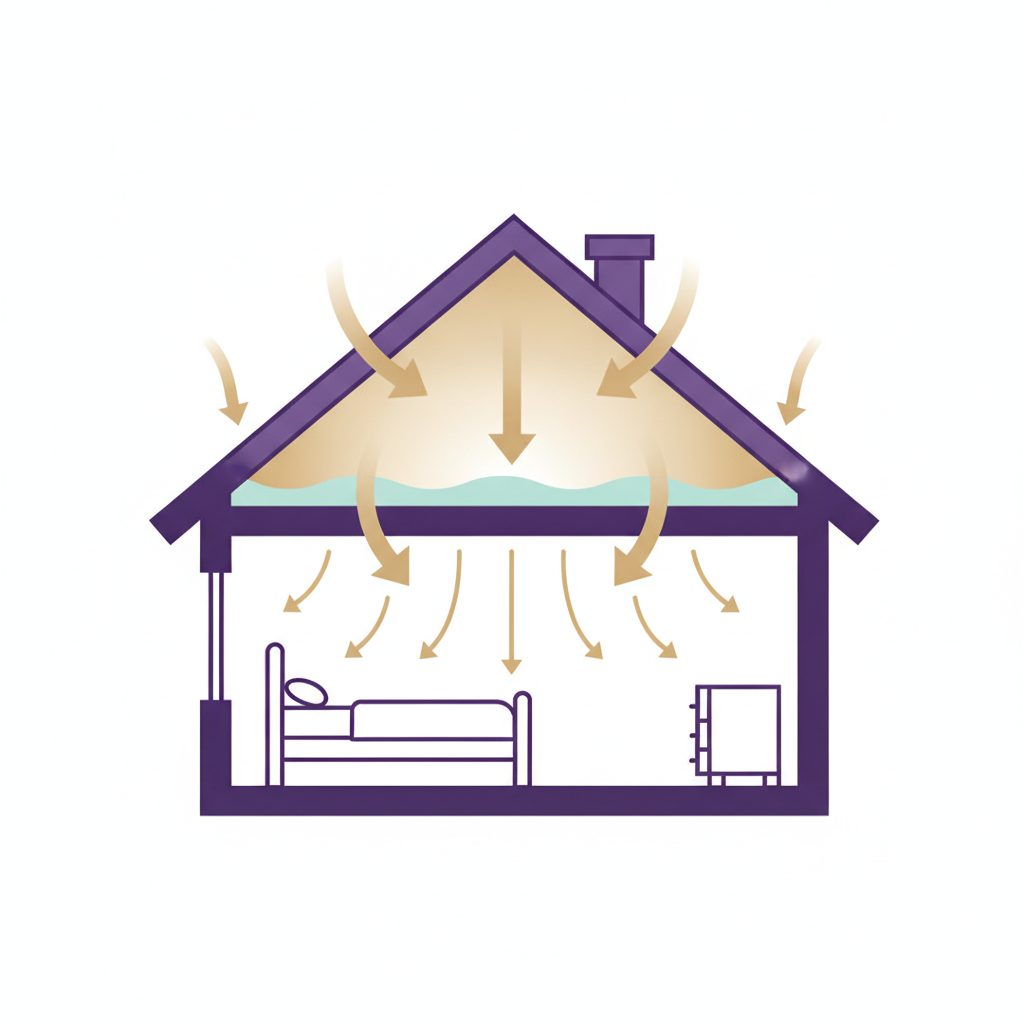
The temperature swings here are the real story. Seminole averages a July high around 93°F and a July low around 67°F — a 26°F swing in a single day. In January, the average high is around 56°F and the average low around 28°F — a 28°F swing. That's not unusual weather here; that's a typical day. West Texas' dry air and clear skies mean there's very little cloud cover or humidity to trap daytime heat overnight, so temperatures fall fast after sunset and climb fast again after sunrise.
That swing matters for three concrete reasons. First, your HVAC system runs near-continuously through summer and still faces real winter heating demand — the envelope can't be optimized for just one season. Second, the constant thermal expansion and contraction from those swings gradually opens small gaps at seams, trim, and penetrations, which is exactly the kind of leak path that rigid batt insulation can't seal but expanding spray foam can. Third, the radiant heat load on roofs and attics here is severe: with West Texas' intense, largely unobstructed sun exposure, attic temperatures on a 95°F day can climb well past 130°F, radiating heat directly down into living space through an under-insulated ceiling plane.
One more wrinkle specific to this region: because the air is so dry, HVAC systems here do almost all their work on sensible cooling (lowering temperature) rather than sharing the load with dehumidification, the way systems do in humid climates. That means your envelope's actual thermal performance — not just your AC unit's tonnage — is what really controls both comfort and cost. You can buy a bigger air conditioner. You can't buy your way out of a leaky attic. For homes in Seminole specifically, our attic insulation services are built around this exact climate profile.
Air Sealing — The Half of the Equation Most Homeowners Miss
Here's the distinction that changes how you should think about this whole topic: R-value and air sealing are two separate performance metrics, and a home needs both.
Insulation slows conductive heat transfer through solid materials. Air sealing stops convective heat loss — the literal movement of conditioned air out of your home and unconditioned air into it, through gaps at top plates, can lights, duct chases, rim joists, and attic hatches. You can have a thick, well-installed batt of fiberglass sitting in your attic and still be losing a huge share of your energy budget if the attic floor beneath it is full of unsealed penetrations.
And that share is large. ENERGY STAR's research puts air leakage at 25–40% of the energy used for heating and cooling in a typical home — independent of whatever R-value is sitting in your walls and attic. ENERGY STAR's DIY inspection checks back this up, identifying the attic, foundation, and window/door gaps as the common targeted air-sealing points that reduce total air infiltration by roughly 25% on their own.
| Traditional batt/blown | Spray foam | |
|---|---|---|
| Slows conduction | Yes | Yes |
| Seals air leaks | No — gaps at seams & framing | Yes — expands into every gap |
| Two jobs, one install? | No — needs separate air sealing | Yes |
| Settles/compresses over time | Yes, reduces effective R-value | No |
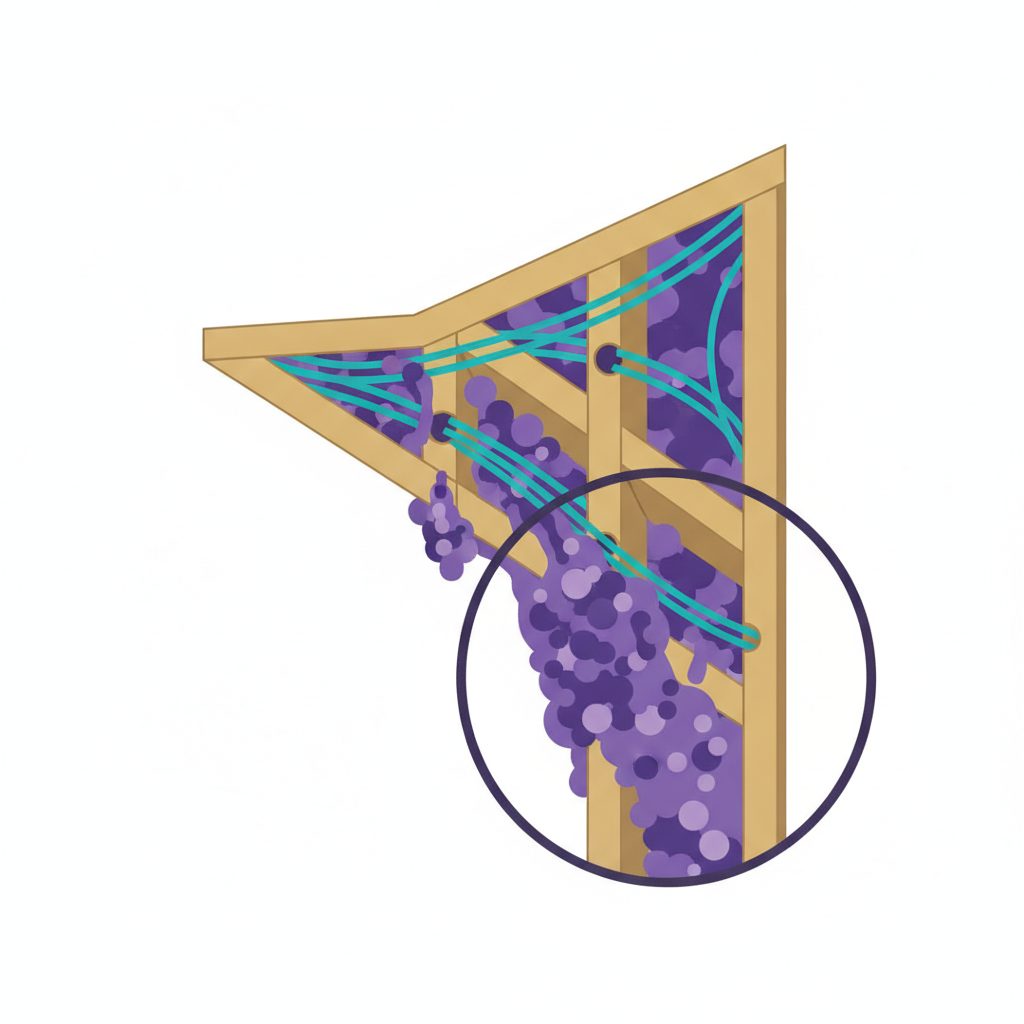
This is precisely why spray foam is often described as a "two problems, one install" solution. Because it expands into every crack, gap, and irregular penetration it encounters — around wiring, plumbing penetrations, top and bottom plates, odd framing — it forms a continuous air barrier as a byproduct of simply filling the cavity. According to the Spray Polyurethane Foam Alliance's technical documentation, that combination of R-value plus a continuous air seal is what separates spray foam's real-world performance from its labeled R-value alone. Our home insulation work addresses both halves of this equation in a single visit rather than treating them as separate line items.
Spray Foam vs. Traditional Insulation — Which Saves More?
There's no shortage of marketing claims in this space, so let's be precise about what's defensible and what isn't.
Closed-cell spray foam (R-5.6–R-8.0 per inch, commonly cited at R-6–R-7) delivers roughly double the R-value per inch of open-cell foam (R-3.5–R-3.9 per inch), and both outperform fiberglass batt (R-2.2–R-2.7 per inch) on a straight per-inch basis. But the bigger differentiator, as covered above, is the air-sealing effect layered on top of that R-value. Industry sources — not independently verified DOE studies, so we're citing them as industry data rather than federal data — commonly put spray foam's combined heating/cooling loss reduction versus conventional insulation in the 20–30% range.
Treat inflated claims skepticallyYou'll see higher numbers (40–50%) floated in some marketing material; we'd encourage you to treat those skeptically, since they're not consistently traceable back to independent lab or DOE sourcing. We stick to the 20–30% range because it's defensible.
Durability is where the gap widens further. Spray foam is commonly rated for 50+ years of service life without settling or degrading. Batt and blown insulation, by contrast, typically needs replacement or top-up within 10–15 years as it settles, compresses, or shifts — which means its effective R-value in place often falls well below its labeled rating years before anyone notices. Closed-cell foam's density also gives it meaningfully better resistance to dust and wind-driven infiltration, which is a more relevant concern in West Texas than humidity or mold.
None of this means fiberglass or cellulose are bad products — they can meet code and deliver real savings when properly installed and air-sealed separately. But if you're comparing on a "savings per dollar over the life of the material" basis rather than sticker price alone, spray foam's durability curve changes the math considerably.
Realistic Savings Estimates for West Texas Homes
Let's translate the percentages into something closer to a real household budget.
Using the DOE's "up to 20%" and ENERGY STAR's "up to 15%" figures as our defensible range, a West Texas home currently under-insulated relative to the Zone 3B minimums (R-38 attic, R-13 walls) that spends, say, $2,400–$3,600 a year on heating and cooling could reasonably expect $250–$700+ per year in savings after a proper insulation-plus-air-sealing upgrade — with the higher end of that range applying to homes starting from genuinely poor conditions (old, settled fiberglass, minimal or no air sealing) and the lower end applying to homes doing a partial or attic-only upgrade.
Envelope upgrades like this typically show a 5–10 year payback period. That's a meaningfully different value proposition than HVAC equipment, which has a finite mechanical lifespan of 15–20 years before it needs replacing again — a properly installed insulation upgrade, especially spray foam, keeps delivering savings for decades after it's paid for itself, often outlasting two or three HVAC replacement cycles in the same house.
There's also a secondary savings angle worth knowing about: a properly sealed and insulated home often allows for a smaller HVAC system at replacement time, since the equipment isn't fighting the same heat gain/loss it used to. That's not a guaranteed outcome for every home, but it's a real conversation to have with your HVAC contractor once your envelope is upgraded — smaller equipment costs less upfront and less to run.
Tax-credit updateThe federal Energy-Efficient Home Improvement Tax Credit (25C) — 30% of project cost, capped at $1,200 per year — expired December 31, 2025 and is no longer available for new projects. Insulation still pays for itself through energy savings alone; check with your tax professional and local utility for any remaining state or utility rebates.
Attic Ventilation Myths vs. Encapsulated Attic Assemblies
There's a persistent piece of conventional wisdom that says the fix for a hot attic is more ventilation — bigger ridge vents, more soffit vents, a powered attic fan. Ventilation does have a real job: managing roof deck moisture and reducing shingle degradation over time. But it is not a substitute for adequate air sealing and insulation at the ceiling plane, and it won't meaningfully cool a living space below an under-insulated attic floor. The insulation plane — not the vents — is what actually protects the rooms underneath.
Spray foam opens up a genuinely different envelope strategy: the unvented, or "encapsulated," attic assembly, where closed-cell foam is applied directly to the underside of the roof deck rather than laid across the attic floor. This moves the insulation and air barrier up to the roofline, which effectively brings your ductwork and HVAC equipment inside the home's thermal envelope instead of sitting in a 130°F+ attic all summer. In a climate where a huge share of unwanted heat gain enters through the roof deck, that's a meaningfully different — and IECC/Building America Solution Center-documented — approach, not a shortcut. Our attic insulation crews can evaluate whether a traditional attic-floor approach or an encapsulated roofline approach makes more sense for your specific home.
Getting Started — What This Means for Your West Texas Home
If you're deciding where to start, the attic is almost always the highest-leverage place to begin: it's where the biggest share of both summer heat gain and winter heat loss happens in this climate, and it's typically the most accessible place to upgrade without opening up finished walls. From there, air sealing at the attic hatch, top plates, and duct chases closes the gap that insulation alone can't.
What matters most, though, is getting an honest, climate-specific assessment rather than a generic national estimate. A home in Seminole with 90s-era attic insulation and no air sealing is a very different job — and a very different savings opportunity — than a newer home in Midland that's already close to code but has a few obvious leak points. We serve Seminole, Andrews, Lubbock, Midland, Odessa, and the surrounding Gaines, Terry, Yoakum, and Andrews County communities, and every estimate starts with looking at your specific attic, walls, and current insulation condition — not a one-size-fits-all number.
Frequently Asked Questions
Does spray foam insulation pay for itself?
Yes, for most homes. Envelope upgrades like spray foam insulation typically show a 5–10 year payback period based on DOE and ENERGY STAR combined savings data, and unlike HVAC equipment, spray foam continues delivering savings for 50+ years after that — well past the point where it's paid for itself many times over.
How much can insulation save on energy bills in West Texas?
Using ENERGY STAR's "up to 15%" and DOE's "up to 20%" figures for combined air sealing and insulation upgrades, a typical West Texas home spending $2,400–$3,600 a year on heating and cooling could reasonably expect $250–$700+ per year in savings, depending on how under-insulated the home currently is.
Is spray foam insulation worth it in hot climates like West Texas?
Yes. West Texas' IECC Zone 3B climate — with its heavy cooling load, extreme diurnal temperature swings, and intense radiant roof heat — is exactly the kind of climate where spray foam's combined R-value and air-sealing performance provides the most value, since both conductive and convective heat transfer are working against you here in both directions across a single day.
What R-value do I need for insulation in West Texas?
IECC Climate Zone 3B (covering Seminole, Andrews, Lubbock, Midland, and Odessa) sets minimums of R-38 for attics (R-49 preferred), R-13 for exterior walls, and R-13 for floors over unconditioned space. Many older homes in this region were built under earlier codes and don't currently meet even these minimums.
Will insulating my attic help keep my house cooler in summer?
Yes. Attic temperatures on a 90°F+ day can climb well past 130°F, and without adequate insulation and air sealing at the ceiling plane, that heat radiates directly into the rooms below. Properly insulating and sealing the attic reduces how hard your air conditioner has to work to offset that heat gain.
What's the difference between open-cell and closed-cell spray foam?
Open-cell foam runs R-3.5 to R-3.9 per inch and needs to be applied at roughly 3.75 inches or more to function as an effective air barrier. Closed-cell foam runs R-5.6 to R-8.0 per inch (commonly R-6 to R-7) and forms both an air barrier and a vapor barrier at just 1 to 1.5 inches, making it the denser, higher-performing option per inch of cavity space.
Does air sealing alone save money without new insulation?
Yes, though the combined approach performs best. ENERGY STAR's research attributes 25–40% of a typical home's heating/cooling energy use to air leakage alone, and targeted air sealing can reduce total infiltration by roughly 25% on its own — but pairing it with insulation upgraded to current Zone 3B minimums delivers the fuller 15–20% combined savings range.
Can spray foam reduce my HVAC system size and cost?
Potentially, yes. A properly sealed and insulated home places less demand on HVAC equipment, which can allow for a smaller replacement system at your next HVAC upgrade — smaller equipment costs less to purchase and less to run. This isn't guaranteed for every home, but it's worth discussing with your HVAC contractor once your envelope has been upgraded.
Are there tax credits available for insulation upgrades?
The federal 25C Energy-Efficient Home Improvement Tax Credit (30% of project cost, capped at $1,200/year) expired December 31, 2025. Ask your tax professional and local utility about any remaining state or utility rebates for insulation work.
How long until I see energy savings results from new insulation?
Most homeowners notice comfort improvements — cooler rooms, fewer hot spots, less draft — within the first few weeks. Measurable energy bill savings typically become clear within the first full heating or cooling cycle, with the full annual savings picture visible after one complete year of seasonal operation.
The Bottom Line
Energy savings from insulation isn't a marketing promise in West Texas — it's basic building science backed by DOE and ENERGY STAR data, applied to one of the more demanding climates in the country. R-value alone isn't the whole story; air sealing closes the other half of the equation, and that's exactly where spray foam earns its reputation as a two-problems-one-install solution rather than just another insulation product.
Ready for a Climate-Specific Insulation Assessment?
If your home is due for an honest look at where you stand against Zone 3B minimums and where you're losing energy, we're based right here in Seminole and built our business around this exact climate — not a national average.
Get in Touch with Desert Spray Foaming