When to Replace Insulation: 5 Warning Signs to Know
Rodent damage, mold, settling, age, rising bills — how to tell your insulation needs replacing, how to inspect it yourself, and what makes West Texas homes and businesses fail faster.
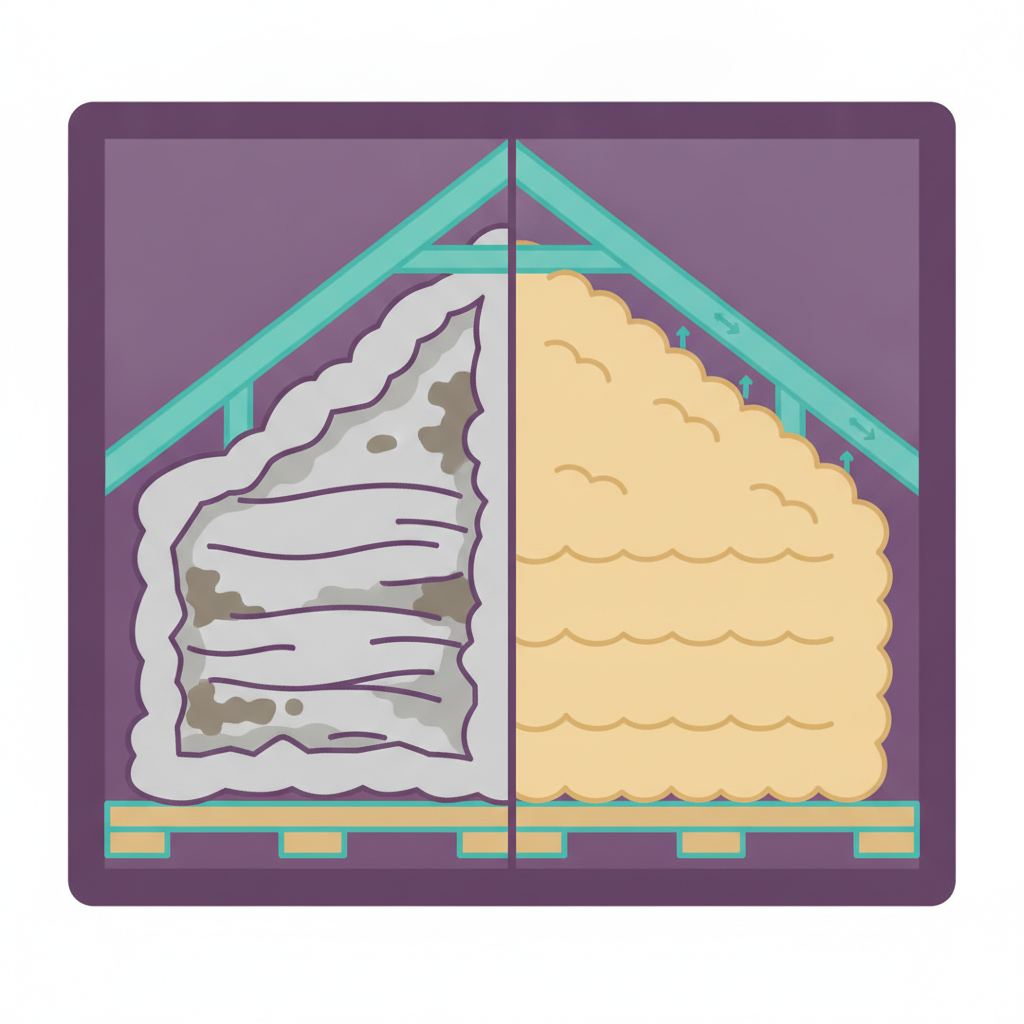
Insulation doesn't fail the way a water heater or a roof does. There's no burst pipe, no obvious leak, no single dramatic moment that tells you it's time. Instead, insulation degrades quietly — a little more R-value lost every year to settling, moisture, age, or pests — until one day you notice the upstairs bedroom never quite cools down, or your electric bill has crept up two months running for no reason you can point to.
According to the U.S. Department of Energy's ENERGY STAR program, roughly 9 out of 10 U.S. homes are under-insulated relative to current recommendations. In West Texas — where Seminole, Andrews, Lubbock, Midland, and Odessa see triple-digit summer heat and the occasional brutal winter freeze — under-performing insulation gets punished harder and faster than it would in a milder climate.
This guide walks through the five clearest signs that insulation needs to be replaced (not just topped off), how to inspect what you have, and how to decide between adding more insulation and removing it entirely.
Key Takeaways
- Five signs mean replacement, not repair: rodent/pest damage, moisture or mold, settling/compaction, age beyond the material's lifespan, and a rising energy bill with no other explanation.
- The replace-vs-supplement rule: if existing insulation is wet, moldy, pest-contaminated, or badly compressed, it has to come out — adding new material on top just buries the problem. If it's clean, dry, and simply thin from age, topping it off is a reasonable, less expensive fix.
- Never DIY-clean rodent droppings from insulation. Dry sweeping or vacuuming can aerosolize contaminants tied to hantavirus. That job belongs to a professional with the right protective equipment.
The 5 Signs Your Insulation Needs Replacing

1. Rodent & Pest Damage
Droppings, urine staining, nesting material, and a lingering ammonia odor — insulation absorbs contamination that surface cleaning can't remove.
2. Moisture, Water Damage & Mold
Wet insulation doesn't recover once dry — it stays compressed and becomes an active mold substrate within 24-48 hours.
3. Settling & Compaction
Loose-fill insulation loses loft under its own weight — invisible from the attic hatch without a depth check.
4. Age
Fiberglass 15-20yr, cellulose 20-30yr, spray foam 80-100+yr — the material determines how long "normal" performance lasts.
5. Rising Energy Bills
A creeping bill with no rate change, paired with drafts or uneven temperatures, is a commonly ignored R-value signal.
1. Rodent & Pest Damage
Mice, rats, and other attic pests don't just live in insulation — they destroy it. Constant movement compresses and flattens fiberglass and cellulose, carving tunnels that ruin the even loft the material needs to hold air (and R-value) in place. Droppings, urine stains, and nesting material spread through multiple areas of an attic are a clear signal that the insulation itself, not just the attic, has a problem. A lingering ammonia-like odor after the animals are gone usually means the insulation absorbed the waste and needs to be removed, not simply aired out.
This is also a genuine health and safety issue, not just a cosmetic one. Rodent droppings can carry hantavirus, and the CDC's guidance on handling rodent-contaminated areas is explicit: never dry-sweep or vacuum droppings, because doing so can send contaminated dust into the air where it can be inhaled. If you find widespread droppings, urine staining, or nesting material in your attic insulation, stop and call a professional — this is exactly the kind of job insulation removal exists for, handled with proper containment and respiratory protection instead of a shop vac and good intentions.
2. Moisture, Water Damage & Mold
Wet insulation doesn't recover once it dries out — not functionally. Water collapses the air pockets that give fiberglass and cellulose their insulating power, and once that structure is compressed, drying it doesn't restore the lost R-value. Worse, damp insulation is an active mold substrate. The EPA's guide to mold and moisture in the home notes that mold can begin growing within 24 to 48 hours of water exposure — which is faster than most homeowners think to check.
Roof leaks, plumbing leaks near attic penetrations, and condensation from HVAC lines running through the attic are the most common moisture sources in this region. If insulation looks matted, discolored, or shows any visible mold, replacement — not drying — is the correct response, and the moisture source itself needs to be fixed or the problem simply comes back.
3. Settling & Compaction
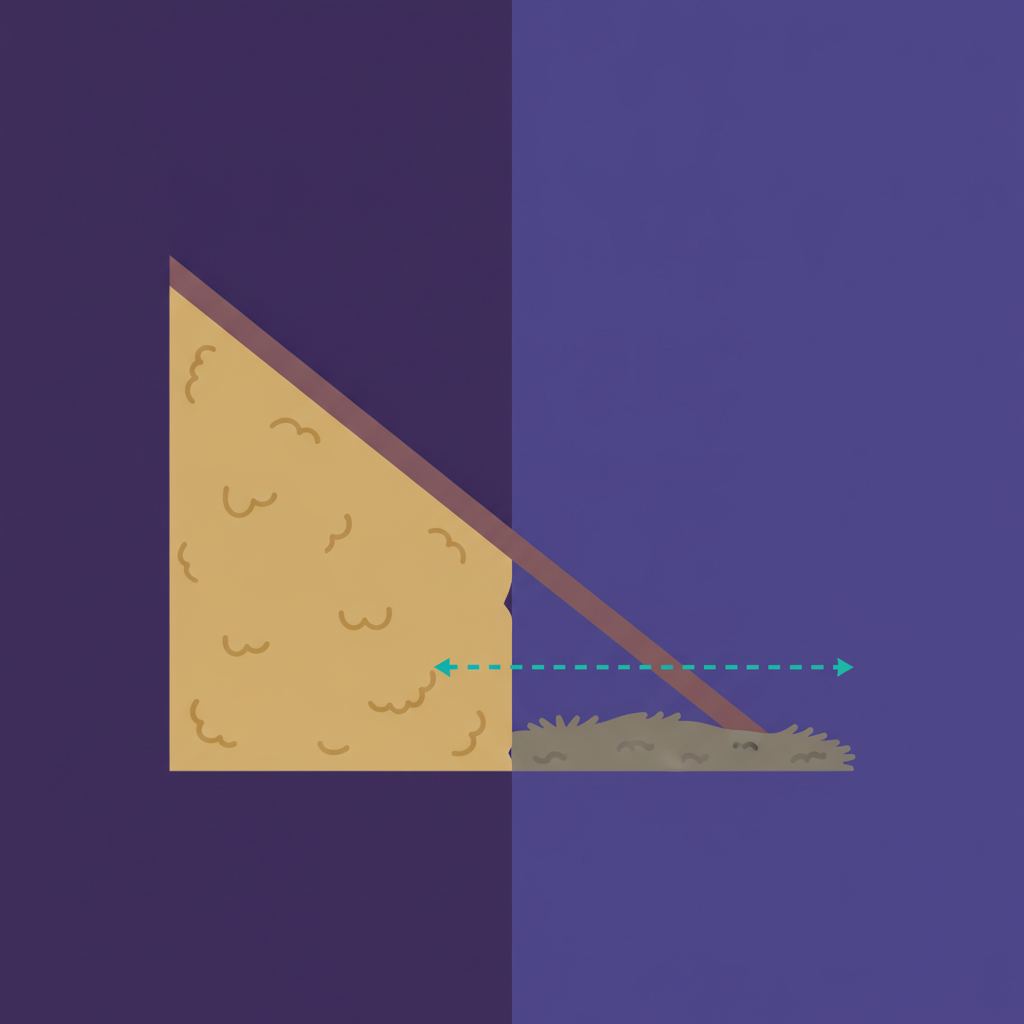
This is the sign nobody sees coming because it's invisible from the attic hatch. Loose-fill insulation — blown-in fiberglass or cellulose — settles under its own weight over time, losing loft and, with it, R-value, even with zero visible damage. Research from the insulation industry's own manufacturer association found that fiberglass and mineral wool batts tested decades after installation still held onto roughly 95% of their labeled R-value in lab conditions — the material itself is remarkably stable. The real-world culprit is almost always physical compression: foot traffic, stored boxes, or just decades of settling reduce depth in ways a quick glance won't catch.
That's why a depth check — measuring actual insulation depth against the manufacturer's or installer's original specification — matters more than eyeballing it. A home that looks "insulated" from the attic hatch can be running at half its rated R-value if the material has compacted over 15-20 years. This is one of the reasons a straightforward depth-and-coverage check is worth doing on a schedule rather than only when something else prompts you to look — our attic insulation page covers what proper coverage should actually look like by area of the attic, not just at the center where it's easiest to check.
4. Age (How Long Different Insulation Types Actually Last)
Material lifespan is one of the most misunderstood parts of this topic, and the honest answer is "it depends heavily on the material":
| Insulation Type | Typical Real-World Lifespan | Notes |
|---|---|---|
| Fiberglass batts | 15-20 years | Begins to sag/deteriorate; can reach 80-100 years only under ideal, undisturbed conditions rarely seen in a real attic |
| Cellulose | 20-30 years (ideal) | Often needs replacement in half that time in practice; fire-retardant treatment also wears off over time |
| Closed-cell spray foam | 80-100+ years | Doesn't settle or sag like fiber materials; resists moisture better |
| Open-cell spray foam | 80-100+ years | Similar durability profile to closed-cell but less moisture-resistant |
The NAIMA/Insulation Institute's comparison of insulation types is a useful independent reference here — it's worth noting that spray foam's long lifespan isn't a marketing claim, it's a structural difference: spray foam doesn't compress or lose loft the way batt or loose-fill insulation does, because it isn't relying on loft in the first place.
A simple rule of thumb: if your home's attic insulation is original to a house built more than 15-20 years ago and hasn't been inspected since, it's due for a look regardless of how it appears from the hatch.
5. Rising Energy Bills
A creeping utility bill — with no rate-plan change, no new appliances, nothing different — paired with drafts, uneven room-to-room temperatures, or an HVAC system that runs longer to hit the same setpoint, is one of the most common and most-ignored signs of R-value loss. The Department of Energy's Weatherization Assistance Program data shows average household savings around $372 per year from proper weatherization and insulation work — a meaningful number when it's working against you instead of for you.
If your bill has climbed 15-20% over a comparable period last year and your insulation is old, thin, damaged, or all three, insulation is a reasonable first place to look before assuming the HVAC system itself is the problem. Pairing better insulation with proper air sealing — the subject covered in depth on our spray foam insulation page — is usually the more cost-effective fix than a bigger AC unit.
How to Inspect Your Insulation

DIY Visual Inspection Checklist
You can get a reasonable first read on your attic insulation yourself, following the ENERGY STAR DIY guide to sealing and insulating:
- Pick a moderate-weather day — not peak West Texas summer heat — and bring a flashlight, a dust mask, and a tape measure.
- Walk only on the joists, never on exposed drywall or blown-in insulation directly (it won't hold your weight and you can fall through the ceiling).
- Check depth against the insulation type's expected coverage — if you can see the tops of the floor joists, you're almost certainly under-insulated.
- Look for even distribution. Check the eaves and corners, not just the center of the attic — insulation is often thinner at the edges even when it looks adequate in the middle.
- Look for damage signals: discoloration, dampness, visible mold, droppings, nesting material, or any area that looks pushed aside or missing entirely.
- Stop immediately if you find droppings, mold, or damp material. Don't disturb it further — that's the point where a DIY check should become a professional call.
- Document with photos so you have a before reference when you talk to a contractor.
When to Call a Professional (Thermal Imaging)
A flashlight-and-tape-measure check catches obvious problems, but it misses hidden gaps and gradual settling. Infrared thermal imaging is the more reliable diagnostic: a thermal camera detects surface-temperature differentials that correspond to missing or thinned insulation, showing up as distinct hot or cold spots depending on the season. The Building America Solution Center, a Department of Energy-affiliated resource, notes this kind of scan works best in early morning or evening when indoor/outdoor temperature differences are stable, with doors, windows, and vents closed so airflow doesn't skew the reading.
A blower door test is the complementary diagnostic — it measures whole-house air leakage rather than insulation directly, which matters because insulation and air sealing are usually two sides of the same problem. Insulation alone doesn't stop drafts through gaps, and a home can be fully insulated and still leak heat through unsealed penetrations.
Timing matters for either method. Attempting a thermal scan or even a basic visual check during peak West Texas summer afternoon heat is both uncomfortable and less reliable — attic temperatures can climb well past 130°F under a metal or asphalt roof at 3 p.m. in July, which skews infrared readings and makes a careful visual inspection genuinely unsafe to perform for more than a few minutes at a time. Early morning, or a cooler fall/spring day, gives a more accurate read and a safer working environment either way.
Turn "something feels off" into a specific answer — how many inches of depth you actually have, where the coverage gaps are, and whether what you're looking at is age-related thinning or active contamination.
Replace vs. Supplement: How to Decide

This is the decision point that trips up more homeowners than any other part of this topic, and it's worth being direct about it: you should always remove contaminated insulation before adding anything new on top of it. Covering over pest damage, moisture, or mold with a fresh layer doesn't fix the underlying problem — it buries it, often trapping odor or moisture where it keeps causing damage out of sight.
| Full Removal Needed When... | Supplementing (Adding on Top) Is Reasonable When... |
|---|---|
| Pest droppings, urine, or nesting material are present | Existing insulation is clean, dry, and pest-free |
| Insulation is wet, has been wet, or shows any mold | It's simply below current recommended depth due to age |
| Material has settled well below current R-value recommendations across the whole attic | The added material is compatible with what's already there |
| There's a lingering odor after a pest or leak issue is resolved | No structural or moisture issues are present |
| You're switching insulation types (mixing materials can create vapor-barrier conflicts) | — |
The University of Maryland Extension's home energy guidance puts it simply: seal before you insulate, and don't insulate over an unresolved problem. As a rough national cost range (confirm actual pricing with a local inspection, since it depends heavily on attic size and access): topping off clean, dry insulation typically runs in the range of $1-4 per square foot, while full removal and replacement runs roughly $3.50-7 per square foot. The only way to know which situation you're actually in is a physical inspection — from the attic hatch, it's easy to mistake "a little thin" for "contaminated" in either direction, and guessing wrong either wastes money or leaves a health problem sealed under new material.
Why West Texas Insulation Fails Faster

Insulation in Seminole, Andrews, Lubbock, Midland, Odessa, and the surrounding Andrews, Gaines, Lubbock, Terry, and Yoakum county communities works harder than insulation in a mild climate, for a few specific reasons.
Extreme summer heat. West Texas regularly sees 100°F+ summer days. The Department of Energy classifies this region within a hot climate zone where insulation's job is arguably more about keeping heat OUT than keeping it in — an under-insulated attic here turns into a heat reservoir that pushes warmth down into living space all afternoon and evening.
Occasional hard freezes. Despite the region's heat reputation, West Texas also experiences serious winter cold snaps — the statewide February 2021 freeze event being the clearest recent example. Homes here are frequently not built with cold-climate assumptions the way a northern-climate home is, and inadequate insulation combined with air leaks was a significant factor in heat loss during that event across the state.
Older housing stock. Texas had no statewide building energy code until 2001, meaning a large share of homes and commercial structures in this market were built with inconsistent, often minimal insulation by today's standard. The DOE's current insulation R-value guidance by climate zone sets recommendations well above what a lot of pre-2001 West Texas construction actually has in place.
Metal buildings and pole barns. Very common across this service area for agricultural and light-commercial use, these structures have their own failure patterns — condensation forming directly on ceiling insulation, and intense radiant heat load transmitted through metal roofing — that a standard residential attic doesn't experience in the same way. A metal roof with no insulation or vapor barrier can sweat like a cold glass on a summer day whenever warm, humid air meets the cooler interior surface overnight, and that condensation drips steadily onto whatever insulation (or equipment, or livestock, or stored inventory) sits below it. Commercial spray foam applications solve this specific problem by acting as both insulation and a continuous air/vapor barrier in one step, which is a meaningfully different failure mode than the pest-and-settling issues that dominate residential attics.
Dust infiltration. The dry, wind-exposed West Texas environment pushes fine dust into attic spaces through soffit vents and roof penetrations more aggressively than a humid climate does. This can make aging fiberglass look dirtier and more degraded than it may actually be — worth distinguishing genuine dust accumulation from actual contamination during an inspection, since one is cosmetic and the other isn't.
Common Insulation Myths
A few misconceptions consistently lead homeowners to either ignore a real problem or fix one that doesn't exist:
- "Insulation is only for winter." It works both directions — slowing heat transfer into the home in summer is just as much its job as retaining heat in winter, and arguably more relevant in a West Texas climate.
- "More insulation is always better." Each additional layer delivers diminishing returns, and over-insulating without addressing ventilation can create its own moisture and condensation problems.
- "Install it once and forget it." Pest activity, moisture events, and simple aging all change insulation's performance over the life of a home — it should be checked periodically, not assumed permanently fine because it was installed once.
- "If I can't see damage, it's fine." Settling and R-value loss from age are frequently invisible without a depth check or thermal scan — no visible damage doesn't mean full performance.
- "A little water won't hurt it." Any wet fibrous insulation is compromised. It should be replaced, not dried and reused, because of both mold risk and permanent loft loss.
Vermiculite & Legacy Insulation Caution

If your attic has loose, pebbly, gray-to-silver insulation — often called vermiculite — treat it carefully. A significant share of vermiculite sold in the U.S. before 1990 came from a single contaminated source mine and may contain asbestos. The EPA's guidance on vermiculite insulation is direct: don't disturb it, don't vacuum or sweep it, and don't attempt removal yourself. If you find this material, the EPA's own Q&A on vermiculite risk recommends leaving it undisturbed and having it tested by a licensed professional before any insulation work happens in that attic — this is not a DIY judgment call.
Get a Professional Insulation Assessment
Reading the signs is the first step — confirming what's actually happening in your attic is the second, and it's the one that actually settles replace-vs-supplement instead of guessing.
Desert Spray Foaming LLC, based at 150 FM 1429 in Seminole, TX, has been assessing and replacing insulation across West Texas since 2023. Owner Klass brings more than six years of hands-on insulation industry experience to every inspection, and the crew handles everything from rodent-damaged attics to full commercial insulation removal across Seminole, Andrews, Lubbock, Midland, Odessa, and the surrounding Andrews, Gaines, Lubbock, Terry, and Yoakum county communities — including Lubbock-area insulation removal for homes and businesses further from the Seminole home base.
Frequently Asked Questions
How can you tell if your insulation is bad?
Look for insulation that's flat, thin, or visibly compressed compared to its original fluffy depth, along with discoloration, dampness, or mold. Other red flags include uneven room temperatures, rising energy bills, noticeable drafts, and insulation that's unevenly spread — thick in the attic's center but thin near the eaves.
How long does insulation actually last?
It depends on material: fiberglass and mineral wool can last 80-100 years structurally but typically need replacing after 15-20 years of real-world performance; cellulose lasts 20-30 years; spray foam can last virtually the life of the home. Most pros recommend an inspection around the 15-year mark regardless of type.
Does insulation lose R-value over time, even without damage?
Yes. Loose-fill insulation like cellulose and fiberglass settles under its own weight, which can cut its effective R-value by 15-20%. Moisture, compression from foot traffic, and general wear also reduce performance — meaning insulation can look "fine" while performing well below its original rating.
If my insulation is old, do I need to remove it, or can I just add more on top?
If old insulation is dry, clean, and undamaged, you can usually add new insulation directly on top to boost R-value — a cheaper option than full replacement. Removal is required when insulation is wet, moldy, pest-contaminated, badly compressed, or vermiculite — full replace-and-remove costs more but resolves the underlying issue instead of covering it.
Is mold in attic insulation dangerous?
Yes. Mold on insulation can release spores and irritants that circulate through your HVAC system, contributing to respiratory irritation and allergy symptoms, especially for people with asthma or weakened immune systems. Any visible mold on insulation should be evaluated promptly rather than ignored.
Can moldy insulation be cleaned, or does it have to be replaced?
Fiberglass insulation with mold almost always needs full removal — its fibers trap spores too deep to clean effectively, and once insulation gets wet from a leak or humidity, it loses R-value even after drying. The moisture source (leak, poor ventilation) must also be fixed, or mold will return.
Do I need to replace insulation after finding mice or rats in my attic?
Usually yes, if there's real contamination — droppings, urine, chewed or compressed material, and nesting damage destroy R-value and invite moisture and mold. Light, isolated contamination is more of a judgment call, but a physical inspection is the only reliable way to know how much has to go.
Is it safe to clean rodent droppings out of insulation myself?
There is a real, if generally low, hantavirus risk from inhaling dust stirred up from dried rodent droppings and urine. Never vacuum or dry-sweep it — heavy contamination should be professionally removed with proper respiratory protection, not spot-cleaned with household tools.
What does "insufficient insulation" on a home inspection report mean?
It means your current insulation falls short of today's recommended R-value — for example, R-30 when current standards suggest R-49 — not necessarily an emergency. It's one of the most common attic findings on homes built before 1980 and is a reasonable point to negotiate before closing on a home purchase.
My insulation looks like gray or silver pebbles — could it be asbestos?
Possibly. That texture is often vermiculite, and a large share sold in the U.S. before 1990 came from a mine contaminated with asbestos. Don't disturb, vacuum, or remove it yourself — have it tested by a licensed professional before any insulation work is done in that attic.
How can I tell if rising energy bills mean my insulation is failing?
A bill increase of 15-20% without a rate hike or new appliances is a strong signal. Pair that with uneven room temperatures, an HVAC system that runs constantly, or cold walls/ceilings, and it's worth a hands-on attic check — insulation depth below your joists, gaps, or visible damage confirm it.
The Bottom Line
Insulation failure rarely announces itself clearly — it's almost always a combination of a few quiet signals: a bill that's crept up, a room that never feels right, or, more obviously, evidence of pests or moisture when you finally look. The five-sign framework in this guide (rodent damage, moisture/mold, settling, age, and rising bills) is the fastest way to know whether what you're looking at is a top-off job or a full replacement.
When in doubt, get an inspection, not a guess. Desert Spray Foaming serves Seminole, Andrews, Lubbock, Midland, Odessa, and the surrounding West Texas communities — call 432-209-9154 or request an assessment to find out exactly where your insulation stands.