Spray Foam Insulation for Metal Buildings: Stopping the West Texas Condensation Problem
If the underside of your steel roof is dripping on a clear morning and there's no leak in sight, your building isn't broken — it's sweating. Here's the physics behind it, why fiberglass blanket rarely fixes it, and how closed-cell spray foam solves it at the source.
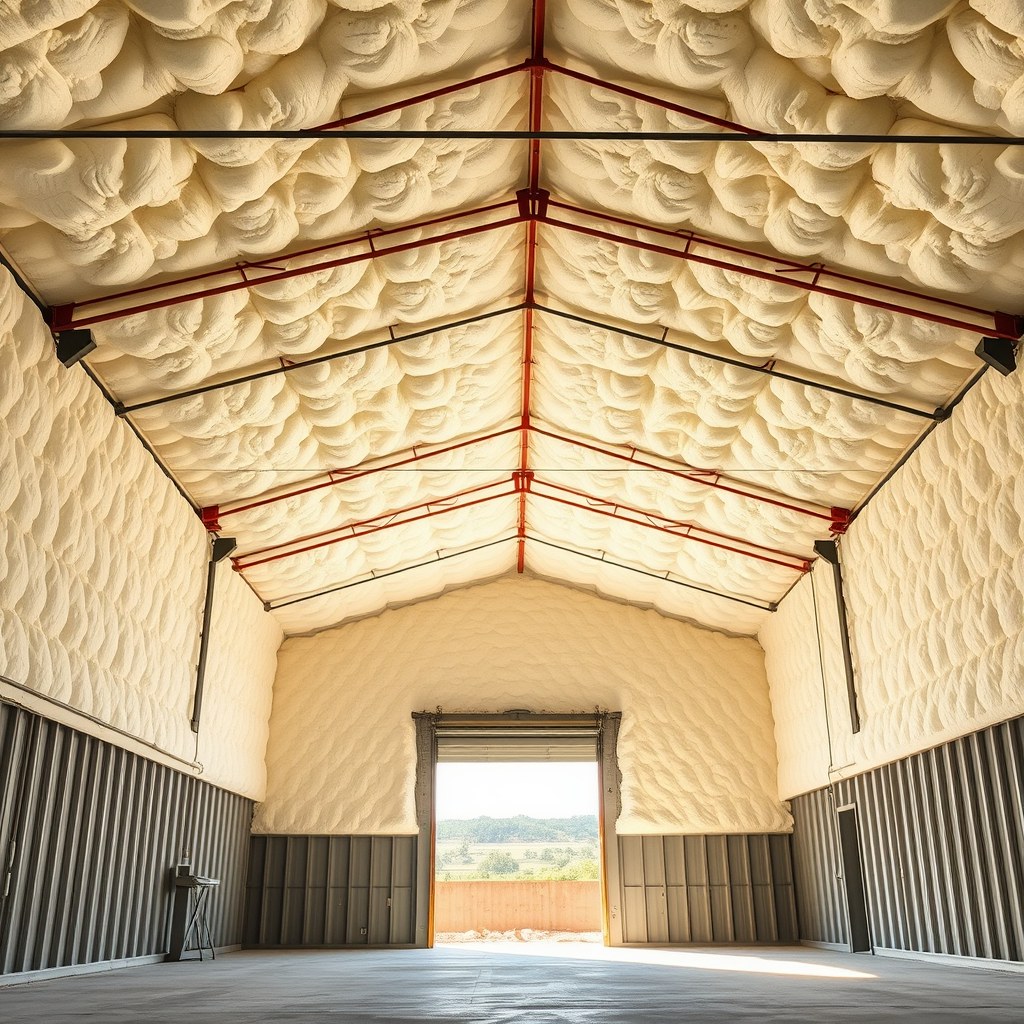
Every fall and spring, we get the same call from shop owners and ranchers across Seminole, Andrews, Lubbock, Midland, and Odessa: water is dripping from the ceiling of a metal building, but there's no rain, no roof leak, and no obvious source. What's actually happening is condensation — the bare steel panel overhead has cooled below the dew point of the air inside the building, and moisture is condensing directly on the metal, just like it does on a cold glass of tea on a summer porch.
This single mechanism is behind most of the rust, dripping, mold, and ruined stored goods we see in West Texas metal buildings, and it's why spray foam insulation for metal buildings has become the standard fix rather than a nice-to-have upgrade. This guide walks through why metal buildings in our climate sweat, why the standard builder-grade fiberglass blanket usually doesn't solve it, how closed-cell spray foam does, and the fire-code details a lot of contractors skip over.
Key Takeaways
- Metal building condensation is dew-point physics, not a construction defect — steel has no thermal mass, and purlins/girts thermally bridge straight through blanket insulation.
- West Texas's Zone 3B climate hits buildings from both directions — radiational cooling drops panel temperature at night, while heated interior air holds more moisture that seeks out the cold steel.
- Vinyl-faced fiberglass blanket sags, compresses at framing, and wicks moisture — its in-service performance commonly falls well short of the rated R-value on the package.
- Closed-cell spray foam adheres directly to the panel, eliminating the exposed condensing surface, reaching R-6–7 per inch and Class II vapor-retarder performance at roughly 1.5–2 inches.
- Exposed spray foam requires a code-approved thermal or ignition barrier — it's a real fire-code requirement, not a detail to skip.
Why Your Metal Building Is Sweating
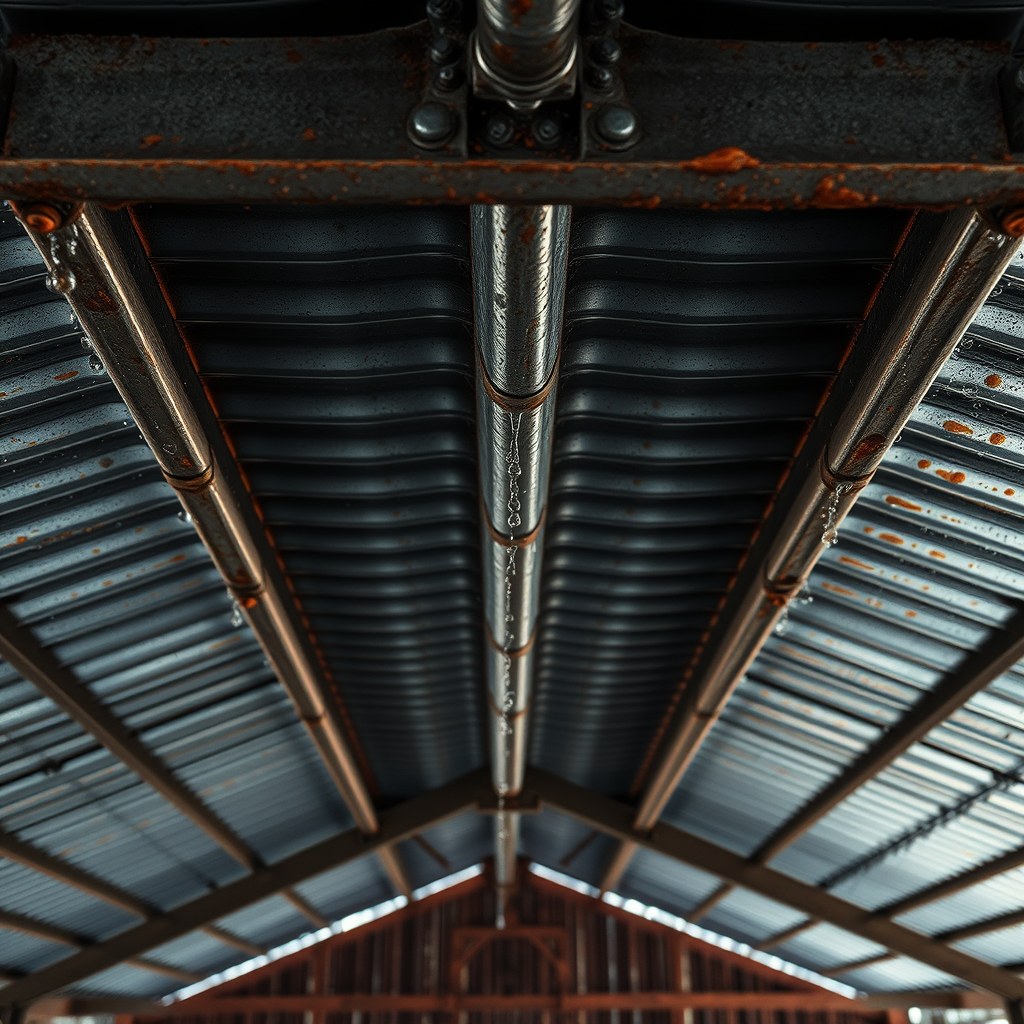
Steel is highly conductive and carries essentially zero insulating value of its own. When the air inside your building is warmer and holds more moisture than the metal skin, and that skin's surface temperature drops to or below the dew point of the interior air, water vapor condenses directly on the panel as liquid. Any surface at or below the dew point of the air touching it will collect condensation — it's basic psychrometrics, not a flaw in your building. EPA guidance on the mold risk from uncontrolled moisture starts from this same principle: uncontrolled surface moisture is the first domino, and everything downstream — corrosion, rot, mold — follows from not addressing it.
Thermal bridging through purlins and girts
Even where blanket insulation is installed, the steel purlins (roof) and girts (wall) that panels are screwed to run continuously through the building envelope, acting as thermal bridges that carry outside temperature straight through the insulation layer. At every purlin or girt line, the blanket gets compressed, thinning the effective R-value exactly where thermal bridging is worst — and the steel member telegraphs outside temperature to the panel, creating a cold stripe where condensation forms preferentially. This is exactly the mechanism the Metal Building Manufacturers Association's condensation guidance describes when it distinguishes ordinary surface condensation from concealed condensation trapped inside the assembly. Continuous closed-cell spray foam eliminates this problem because it's monolithic and adhered directly to the panel, with no compression points at the framing.
Radiational cooling and West Texas diurnal swings
At night, metal roof panels radiate heat to the clear sky faster than the surrounding air cools — a phenomenon called radiational cooling — so the panel surface can fall several degrees below air temperature, often below the dew point even on relatively dry nights. IECC Climate Zone 3B, which covers West Texas, is defined by large diurnal (day-to-night) temperature swings, distinguishing it from the more humid Zone 3A found farther east in Texas. Official NWS climate data for the Midland-Odessa region bears this out — hot days give way to fast-cooling nights, a defining pattern of our climate.
That means West Texas metal buildings get hit by condensation risk from both directions: hot, sometimes humid summer days into fast-cooling nights (radiational cooling can drop roof panel temperatures below the dew point even on relatively dry nights), and in winter, heated interior air from shop heaters, livestock, or equipment holding far more moisture than freezing exterior air — constantly seeking out the cold panel surface.
What Uncontrolled Condensation Actually Costs You
Condensation that keeps recurring isn't just an annoyance — it does real, compounding damage to the building and everything stored inside it:
The insulation itself becomes a casualtyOnce fiberglass blanket insulation gets wet from condensation it doesn't dry out and recover — it wicks and holds the water, losing R-value and becoming a long-term moisture reservoir instead of an insulator, which accelerates every problem above.
Why Vinyl-Faced Fiberglass Blanket Fails in Metal Buildings
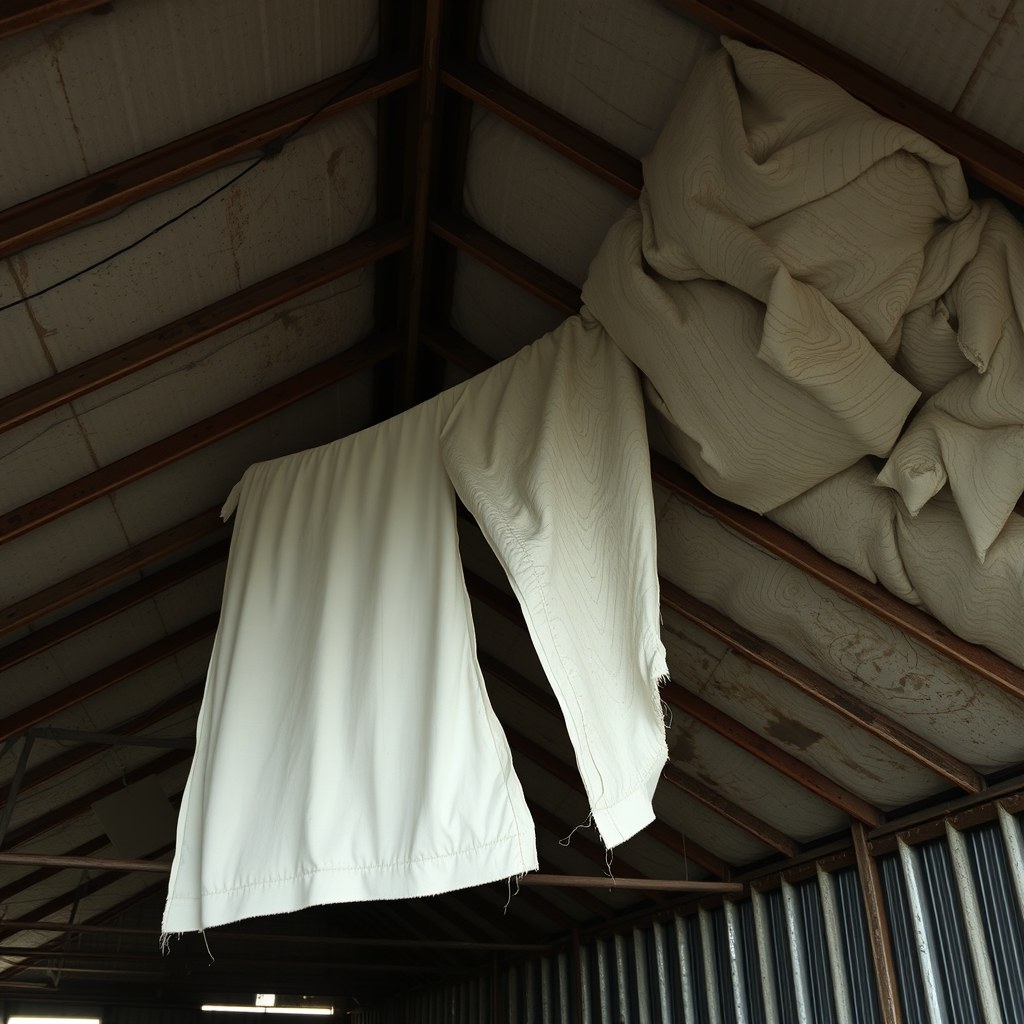
Blanket (batt/roll) insulation with a vinyl or foil facing, draped over purlins and girts before the metal skin goes on, is the standard builder-grade metal building insulation — and it has documented, structural failure modes specific to this application. NAIMA's technical guidance on metal building insulation systems covers how these vapor-retarder facings are laminated to fiberglass and why a perforated facing is sometimes required to avoid trapping a "double vapor retarder" condition at seams — a failure point spray foam simply doesn't have, since there are no facing seams to fail.
| Failure mode | What happens |
|---|---|
| Sagging | Blanket pulls away from the panel, opening an air gap that reintroduces condensation risk against the bare metal |
| Compression at purlins/girts | Blanket is pinched at every framing member, thinning it right where thermal bridging is worst |
| Tearing & gapping | Penetrations, corners, and trim create direct paths for moisture-laden air to reach the panel |
| Wind-washing | Air infiltration moves through the fibrous blanket, stripping away much of its effective R-value |
| Wicking & trapping moisture | Once wet, fiberglass holds water instead of shedding it — destroying R-value and feeding mold/rot |
| Rodent nesting | Fibrous batts are a preferred nesting material in barns and shops, further degrading the material |
Multiple owner accounts in the r/Insulation and r/buildingscience communities independently describe blanket systems in metal buildings failing specifically at the purlin and girt lines, with visible drip staining that lines up exactly with the thermal-bridging and compression mechanism above — this isn't a one-off, it's a widely reported pattern.
How Closed-Cell Spray Foam Solves the Condensation Problem
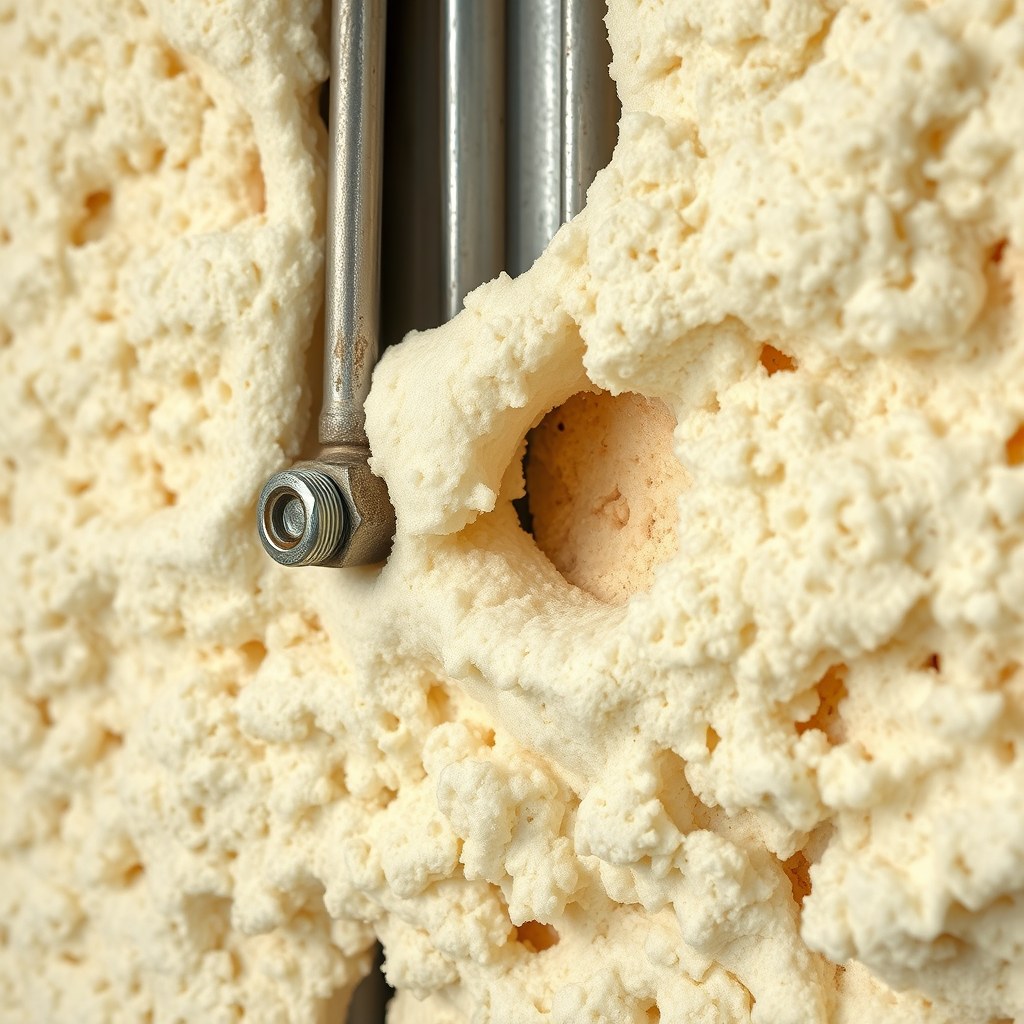
Closed-cell spray polyurethane foam (ccSPF) is spray-applied directly to the underside of the metal panel and adheres to it, so there is no air gap between the insulation and the panel. The panel's inner face is no longer exposed to interior air at all — it's buried under adhered foam — so it can no longer serve as a condensing surface for room-side moisture. Manufacturer data on closed-cell foam's condensation and moisture management describes exactly this mechanism: a seamless air and moisture barrier that helps manage condensation risk rather than merely slowing heat transfer.
R-Value Per Inch: Closed-Cell vs. Open-Cell vs. Fiberglass Blanket
Figures reflect published, generally cited per-inch R-value ranges for each material category per the Spray Polyurethane Foam Alliance's data on closed-cell moisture resistance; fiberglass blanket's nominal per-inch figure commonly runs lower still once installed (see failure modes above). Not a substitute for a product-specific spec sheet.
A closed-cell product like a closed-cell product rated as a Class II vapor retarder illustrates the point at the manufacturer-spec level: reaching vapor-retarder classification at a defined thickness is a documented, testable product property, not a marketing claim.
| Fiberglass blanket | Closed-cell spray foam | |
|---|---|---|
| R-value per inch | ~R-3.1–3.4 nominal (lower installed) | R-6–7 |
| Vapor control | Relies on separate facing; can trap a “double vapor retarder” if misapplied | Class II vapor retarder at ~1.5–2″, no separate facing needed |
| Air sealing | None — wind-washing strips effective R-value | Continuous air barrier |
| Behavior at purlins/girts | Compresses, thins, becomes a cold stripe | Conforms and seals around framing |
| Moisture response | Wicks and holds water once wet | Closed-cell structure resists moisture absorption |
| Long-term performance | Sags, compresses, degrades over years | Adhered, doesn't sag or settle |
Open-Cell Foam on Bare Metal — Be Careful Here
Open-cell foam is lower density, vapor-permeable, and roughly half the R-value per inch of closed-cell. Sprayed directly against the interior face of a bare metal panel, it does not stop vapor drive — moisture can still migrate through the permeable foam and condense at the foam-to-metal bond line, hidden from view. That's arguably worse than no foam at all, because the moisture is now trapped against the steel, invisible, promoting rust that isn't discovered until the assembly is opened up. This is a genuine, independently corroborated building-science concern, not a sales angle for closed-cell — open-cell foam is generally appropriate in a metal building only when paired with a separate, dedicated vapor retarder at the correct location in the assembly, or in applications where interior humidity and moisture drive are low and well managed.
Bottom lineOpen-cell shouldn't be marketed as a standalone condensation fix directly against bare metal the way closed-cell is — it's the right product for some applications, but not that one without a companion vapor strategy.
Thickness Guidance for Climate Zone 3B
The 1.5–2 inch threshold for Class II vapor-retarder performance is well documented and is the minimum condensation-control benchmark regardless of climate zone, because it's a vapor-permeance threshold, not a climate threshold. Full thermal performance targets, however, are climate-zone- and application-specific — set by the ASHRAE 90.1 commercial building energy standard and the adopted IECC tables rather than a single "West Texas number." The Texas State Energy Conservation Office's adopted commercial energy code confirms which IECC edition Texas has adopted for commercial construction, but the specific roof/wall R-value or U-factor target for your building should be confirmed against that current adopted table and your local building authority — not guessed at or quoted from a generic national source. The joint NAIMA/ASHRAE guide to insulating metal buildings is a useful reference for how metal building envelope compliance paths (U-factor vs. R-value) actually work, since metal buildings are evaluated differently than a standard framed wall.
Beyond that condensation-control minimum, full thermal R-value targets depend on whether the space is conditioned or unconditioned, roof vs. wall assembly, and your specific project's compliance path — that's a conversation for a code-aware installer and, where it matters for permitting, your local building department, rather than a number we'll print here without verifying it against your specific building.
Fire Code: Thermal Barrier & Ignition Barrier Requirements
This is the section a lot of contractors skip, and it matters. Spray polyurethane foam is a foam plastic under the International Building Code (IBC) and International Residential Code (IRC), and foam plastics have mandatory fire-protection requirements when left exposed inside a building. The International Building Code's vapor retarder requirements sit alongside a separate, equally important code section: foam plastic must be separated from the interior of the building by an approved thermal barrier — the prescriptive baseline is 1/2-inch gypsum wallboard, or an equivalent material independently tested to the temperature-transmission and integrity fire tests.
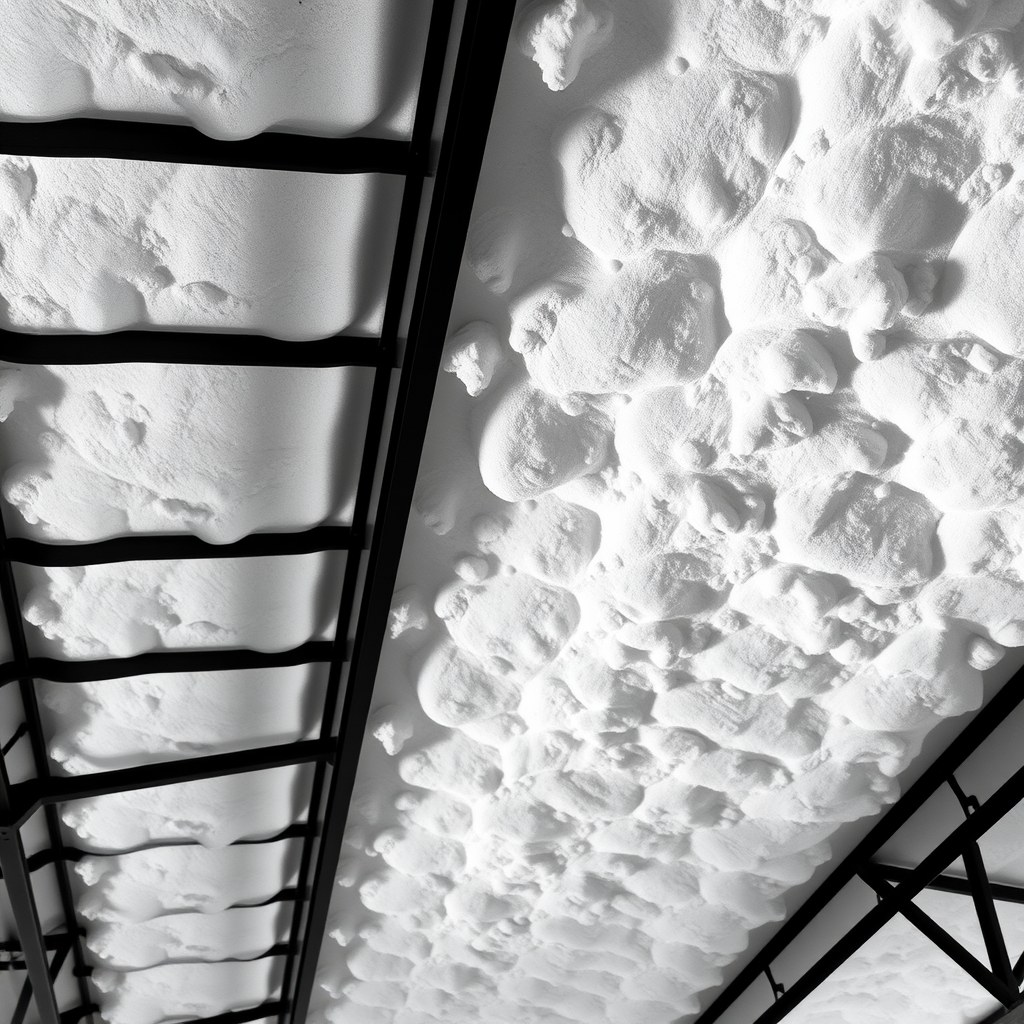
This isn't optional, and it isn't a gray areaWhere drywall is impractical — metal shops, ag buildings, pole barns where the owner wants the foam left exposed rather than boxed in — code allows a code-listed thermal barrier coating like DC315 in lieu of gypsum, provided it's independently tested and code-evaluated. Any installer who leaves foam exposed with no thermal or ignition barrier at all is skipping a real fire-code requirement, not saving you a step.
The exact requirement — and whether a reduced ignition-barrier standard applies for certain unoccupied, agricultural-use, or utility-access-only spaces — is assembly- and use-specific, and varies by code edition and adopting jurisdiction. We could not verify Seminole and Gaines County's specific adopted code edition and any local amendments in researching this article, so treat the general rule above as accurate and confirm the exact application to your specific building and use with your local building authority before your project is scoped.
Where This Applies Across West Texas
The bare-steel condensation mechanism is the same regardless of the building type — only the consequences change:
Whatever the building type, the same fundamentals covered in our metal building insulation and commercial insulation guides apply — and if you're planning a new steel shell rather than retrofitting an existing one, our new construction insulation page covers what to plan for before the panels even go up.
What It Costs
Published national cost-per-square-foot ranges for spray foam insulation generally — not metal-building-specific, and not Desert Spray Foaming's own pricing — run roughly $1.50–$3.50 per sq ft installed for open-cell foam and $3.00–$5.00 per sq ft installed for closed-cell foam, with board-foot pricing used for thicker or custom applications. These are general market ranges, not quotes, and actual cost depends heavily on square footage, roof pitch, eave height, thickness, and access. Get a free on-site assessment for an actual number specific to your building — our spray foam cost breakdown covers the variables in more detail.
The more useful comparison for a metal building owner isn't upfront cost — it's total cost of ownership. Blanket/fiberglass systems have a lower upfront material and labor cost, but the failure modes covered above (sag, compression, wetting, rodent damage, R-value loss) mean an owner commonly faces repeat or replacement costs and consequential damage costs — rust remediation, ruined stored goods, mold remediation — over the building's life that a one-time, adhered, non-degrading closed-cell foam application avoids. That's a legitimate comparison of failure-mode risk and consequential cost, not a fabricated payback number.
Retrofitting an Existing Building
For new construction, closed-cell foam is applied directly to the underside of panels during or after erection, before any interior finish, for the cleanest bond and coverage. For a retrofit onto an existing building with failing blanket insulation, the clear, multiply-corroborated best practice is to tear out the old blanket insulation before spraying — not spray over it. Old fiberglass traps accumulated moisture, dust, and pest droppings under a new foam layer, creating an invisible mold and rot risk, and worn, flattened, or wet blanket material can prevent the new foam from bonding properly to the panel — compromising the very adhesion that makes closed-cell foam work as a condensation fix in the first place.
Comfort & Energy in West Texas Summers
West Texas summers combine intense solar gain on a low-mass metal roof with extreme heat — without insulation, a bare metal shop's interior air temperature tracks the roof-skin temperature closely, making the building nearly unusable during the hottest parts of the day. A continuous, adhered closed-cell foam envelope both slows conductive heat gain through its R-value and, because it functions as an air barrier, stops hot, dusty exterior air infiltration — a major driver of cooling load in a leaky metal shell. DOE's guidance on spray foam as a combined thermal and vapor control layer describes the same mechanism for residential unvented attics, and it applies directly to a metal building's insulated roof and wall assembly.
Reduced HVAC and mini-split load follows directly from reduced conductive and infiltration heat gain — that's standard building-science mechanism, and we describe it here as mechanism rather than quote a specific savings percentage, since no verified, metal-building-specific savings figure exists that we'd stand behind in print. If you're planning cooling for a shop you'll actually work in during summer, our guide on preparing for West Texas summers covers the comfort side of this in more depth, and our commercial insulation guide covers the same principles at a larger building scale.
Getting an Honest Answer for Your Metal Building
Every metal building's condensation risk depends on its specific use, interior moisture load, and construction — a livestock barn in Andrews County has a very different humidity profile than an oilfield service shop in Midland, and both differ from a warehouse used purely for dry storage. That's the conversation we have on every estimate: what's actually driving the moisture in your specific building, what thickness and vapor strategy makes sense for it, and whether closed-cell closed-cell spray foam or a different approach is the right call. We serve metal building insulation in Seminole, pole barn insulation in Andrews, Lubbock, Midland, Odessa, and the surrounding Permian Basin.
Frequently Asked Questions
How do you stop condensation in a metal building?
Condensation forms when warm, moist interior air contacts a metal panel surface below the air's dew point. Stopping it requires closing that gap: a continuous, adhered insulation and air barrier — closed-cell spray foam applied directly to the panel's underside — eliminates the cold, exposed metal surface and blocks the air movement that carries moisture to it.
Do I need a vapor barrier in my metal building?
It depends on climate, use, and insulation type. Fiberglass blanket systems typically need a separate vapor retarder facing. Closed-cell spray foam applied at roughly 1.5–2 inches functions as its own Class II vapor retarder, so a standalone barrier is often unnecessary with that system — verify against your specific assembly and local code.
Is spray foam insulation good for a metal building?
Yes, for the specific failure mode metal buildings have: condensation and thermal bridging at purlins and girts. Closed-cell foam adheres directly to the panel, eliminating the condensing surface, adding R-6 to R-7 per inch, acting as an air and vapor barrier, and sealing around framing and fasteners that blanket insulation can't conform to.
How much does it cost to spray foam a 30x40 metal building?
Cost depends on square footage, foam type, and thickness. Published national averages run roughly $1.50–$3.50/sq ft for open-cell and $3–$5/sq ft for closed-cell installed. A 30x40 building's roof and wall area at that range gives a rough planning number — get a free on-site quote for an exact figure.
Can you DIY spray foam insulation for a metal building?
DIY kits exist for small open-cell jobs, but closed-cell spray foam requires plural-component spray equipment, precise ratio and temperature control, and PPE most owners don't have — a poor mix or thin application can fail to control condensation or bond properly. Most metal building applications, especially closed-cell, are professionally installed.
What's the cheapest way to insulate a metal building?
Fiberglass blanket has the lowest material and labor cost upfront, but sags, compresses at purlins, and traps moisture over time — often creating repeat, replacement, and consequential damage costs. Closed-cell spray foam costs more upfront but doesn't degrade the same way, so total cost of ownership can favor foam over the building's life.
What insulation is best for a pole barn?
For condensation control and durability, closed-cell spray foam applied directly to the panel underside outperforms fiberglass blanket, which sags, compresses at purlins, and attracts rodents in post-frame buildings. Foam adheres permanently, adds R-6–7 per inch, and seals the irregular geometry around wood posts and purlins that blankets can't conform to.
What's the cheapest way to insulate a pole barn?
Vinyl-faced fiberglass blanket is the lowest upfront cost. But multiple independent owner reports describe blanket systems failing at purlins with condensation drip and rodent nesting within a few years — the "cheap" option can mean repeat cost. Closed-cell foam costs more per square foot but doesn't have those failure modes.
What are the common mistakes people make when insulating a pole barn?
The most cited mistake is fiberglass blanket that doesn't sit tight to the metal, leaving a gap that still condensates and becomes a rodent magnet. Others: skipping air sealing, no vapor retarder where one is needed, and spraying foam directly over old, wet, or flattened existing insulation instead of removing it first.
Will a metal roof on purlins have condensation problems?
Yes — bare metal roofing on purlins is one of the most condensation-prone assemblies in ag and residential construction, because the purlins thermally bridge straight through any insulation layer and the panel itself has no thermal mass, so it readily drops to or below the interior air's dew point.
Is open-cell foam sprayed directly on metal building panels a bad idea?
It's a real concern worth taking seriously. Open-cell foam is vapor-permeable, so moisture can migrate through it and condense at the hidden foam-to-metal bond line — a trapped, invisible version of the same condensation problem, not a fix. It's generally acceptable only alongside a separate, dedicated vapor retarder.
Is 2 inches of closed-cell foam enough for a metal building?
Two inches clears the roughly 1.5–2 inch threshold widely documented for Class II vapor retarder performance, which is the condensation-control benchmark. Whether it's enough for your full thermal performance target depends on climate zone, roof vs. wall assembly, and code compliance path — confirm with a code-aware installer for your specific building.
The Bottom Line
Condensation in a West Texas metal building isn't bad luck or a construction defect — it's dew-point physics acting on a material with no thermal mass, made worse by thermal bridging at the framing and our region's wide day-night temperature swings. Fiberglass blanket was never designed to solve that mechanism, which is why it fails in such a consistent, well-documented pattern. Closed-cell spray foam addresses the actual cause — a continuous, adhered air and vapor barrier directly on the panel — rather than papering over the symptom, and when it's installed with the correct thickness and the fire-code barrier requirements it deserves, it's a durable, code-compliant fix rather than a compromise.
Get a Metal Building Assessment
We'll look at your specific building — use, framing, existing insulation, and moisture history — and tell you honestly what it needs and what it costs.
Get a Metal Building Assessment — 432-209-9154