How Much Does Spray Foam Insulation Cost in Seminole? (2026 Price Guide)
Real 2026 pricing data on spray foam insulation cost per square foot, by project type, and by home size — plus what actually drives the number up or down for a Seminole, TX home.
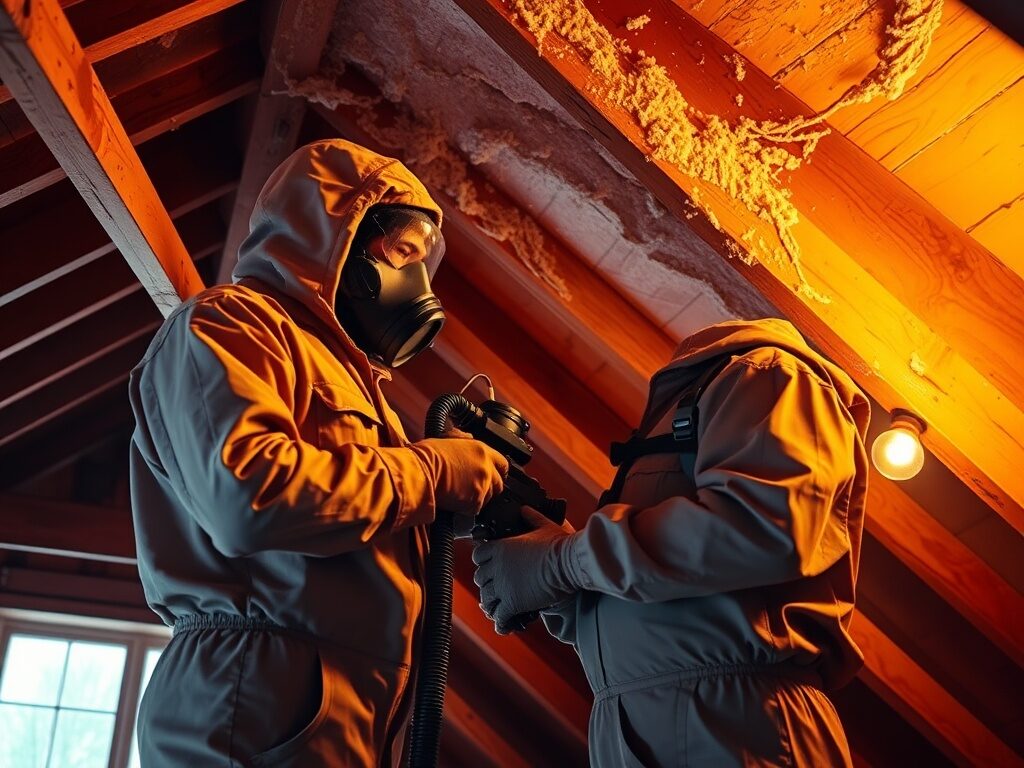
If you've gotten a spray foam quote and it felt like it came out of nowhere — too high, oddly specific, or wildly different from the number your neighbor mentioned — you're not imagining things. Spray foam insulation cost varies more than almost any other home improvement, because it depends on foam type, project size, accessibility, and whether you're insulating an existing home or a new build before drywall goes up.
This guide breaks down real 2026 pricing: cost per square foot for open-cell and closed-cell foam, typical project costs for an attic, a whole-home retrofit, new construction, and a crawl space, how spray foam compares to fiberglass and cellulose on price, what's actually happening with tax credits and financing this year, and what a realistic return on investment looks like for a home in Seminole's climate. No inflated marketing numbers — just the range you should expect to see on a real quote.
Key Takeaways
- Installed cost runs $1.50–$3.50/sq ft for open-cell and $3.00–$5.00/sq ft for closed-cell spray foam in 2026.
- A typical 1,500 sq ft attic runs $3,500–$7,000; a full 2,000 sq ft home retrofit runs $4,500–$14,000.
- The federal 25C tax credit for insulation expired December 31, 2025 — verified directly on irs.gov. It is no longer available for 2026 installs.
- Spray foam costs 2–3x more upfront than fiberglass or cellulose — but in West Texas' extreme Zone 3B climate, typical payback is 3–7 years, not the 8–15 years seen in milder regions.
- Most legitimate spray foam companies carry a $1,000–$2,000 minimum job fee — small quotes below that range are worth double-checking.
Spray Foam Insulation Cost at a Glance
Here's the short answer, before we get into the details: most homeowners in Seminole and the surrounding Permian Basin pay somewhere between $1.50 and $5.00 per square foot installed, with the final number depending almost entirely on whether you choose open-cell or closed-cell foam and how much of the home you're insulating.
Why the range is so wideA national cost guide can only give you a range this broad because it's averaging across every climate, foam brand, and labor market in the country. The numbers below narrow that range for a real West Texas project — but the only way to get an exact figure for your home is a walk-through estimate.
It's worth grounding these numbers in something more than contractor marketing. The ENERGY STAR Seal and Insulate program and the DOE's own Guide to Home Insulation both frame insulation upgrades as a cost-per-performance decision, not just a sticker price — which is exactly the lens this guide uses. Every dollar figure below reflects the cost side of that equation; we cover the performance and savings side in detail further down.
What Determines Spray Foam Insulation Cost
Every spray foam quote is built from the same handful of variables. Understanding them is the fastest way to know whether a quote you've received is reasonable.
Cost Per Square Foot: Open-Cell vs. Closed-Cell
The single biggest driver of your total price is which foam type you choose. Here's the direct comparison.
| Foam Type | Installed Cost / sq ft | Material-Only (DIY kit) / sq ft | R-Value per Inch |
|---|---|---|---|
| Open-cell spray foam | $1.50 – $3.50 | $0.50 – $1.20 | R-3.5 – R-3.9 |
| Closed-cell spray foam | $3.00 – $5.00 | $0.75 – $2.00 | R-5.6 – R-8.0 |
Installed Cost Range by Foam Type ($ per sq ft)
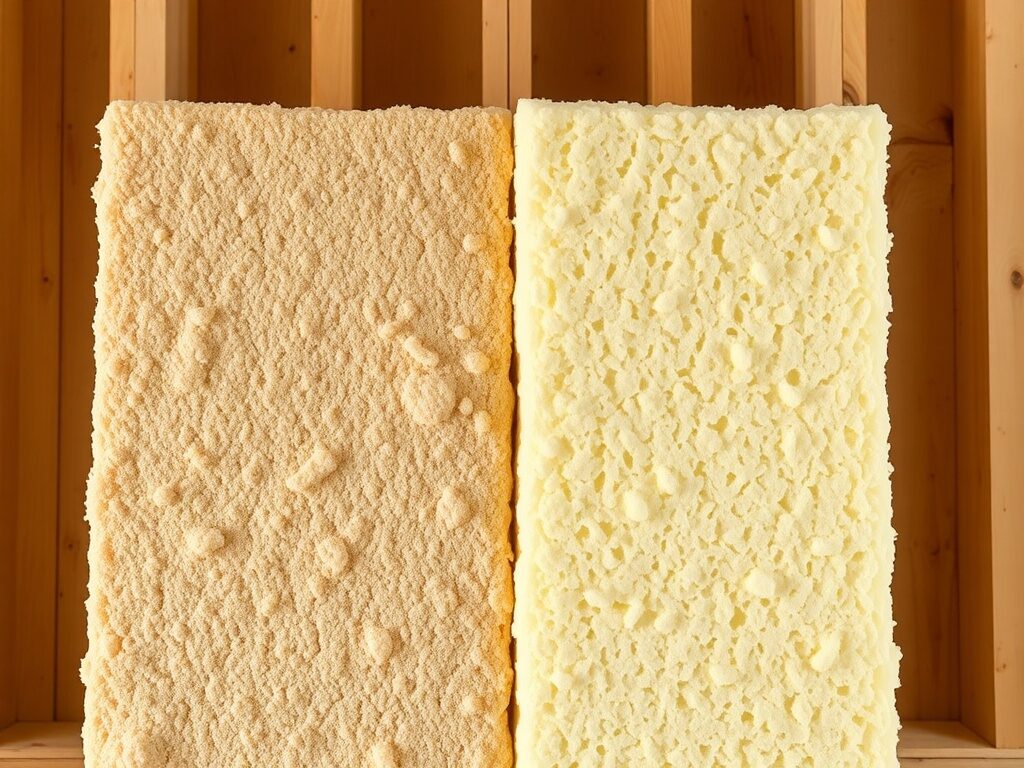
For a full technical breakdown of how these two materials perform — not just what they cost — see our open-cell vs. closed-cell spray foam comparison. The industry's own technical body, the Spray Polyurethane Foam Alliance (SPFA), publishes the underlying material specifications both figures above are drawn from — useful if you want to verify a contractor's claimed R-value against the actual product data sheet before you sign anything.
One more cost-relevant distinction: closed-cell foam's density is what allows it to double as both an air barrier and a vapor barrier at just 1 to 1.5 inches of thickness, while open-cell foam needs roughly 3.75 inches or more to function as an effective air barrier at all. In a tight wall cavity, that difference can mean closed-cell is actually the more space-efficient — and sometimes more cost-efficient per R-value delivered — option, even at a higher price per square foot. Our full spray foam insulation services page covers how we evaluate that trade-off for a specific cavity depth.
Cost by Project Type
Per-square-foot pricing only tells part of the story. Here's what real projects tend to cost once you factor in the total area, labor, and typical minimums.
| Project | Typical Total Cost | Notes |
|---|---|---|
| Attic (~1,500 sq ft), open-cell | $3,500 – $5,000 | Most common single-project scope |
| Attic (~1,500 sq ft), closed-cell | $4,500 – $7,000 | Adds vapor barrier + higher R-value |
| Whole-home retrofit (~2,000 sq ft existing) | $4,500 – $14,000 | Range depends heavily on how many areas (attic, walls, crawl space) are included |
| New construction (2,000–2,500 sq ft) | $14,100 – $30,500 | Full-envelope spray before drywall — higher total but lower cost per sq ft than retrofitting |
| Crawl space | $2,100 – $3,600 | Often priced higher per sq ft due to tight access |
Typical Total Project Cost Ranges (USD)
Watch for scope confusionA quote for "$2,300" and a quote for "$9,000" aren't necessarily the good deal and the ripoff they look like — they're often quoting two different scopes of work (attic-only vs. whole-home, or open-cell vs. closed-cell). Always confirm exactly which areas and which foam type a quote covers before comparing numbers.
Spray Foam vs. Fiberglass vs. Cellulose — Cost Comparison
Spray foam isn't the cheapest insulation option upfront, and it's worth being direct about that.
| Material | Installed Cost / sq ft | Typical Lifespan |
|---|---|---|
| Blown-in fiberglass | $1.00 – $1.70 | 15–20 years before sagging/settling |
| Blown-in cellulose | $1.10 – $1.80 | 20–30 years ideal, often shorter in the field |
| Open-cell spray foam | $1.50 – $3.50 | 80–100+ years, does not settle |
| Closed-cell spray foam | $3.00 – $5.00 | 80–100+ years, does not settle |
That price gap is real, and we won't pretend otherwise. But a fair cost comparison has to account for what each material actually delivers: fiberglass and cellulose slow conductive heat transfer only, while spray foam adds a continuous air barrier as a byproduct of filling the cavity — which is why national data attributes 25–40% of a typical home's heating/cooling energy use to air leakage that batt and blown-in insulation simply don't address on their own. For the full mechanics of why that matters, see our energy savings from insulation breakdown.
West Texas & Seminole Pricing Considerations
National cost guides are a useful starting point, but they're built from data across every climate in the country. A few things shift the numbers specifically for a Seminole or Permian Basin home.
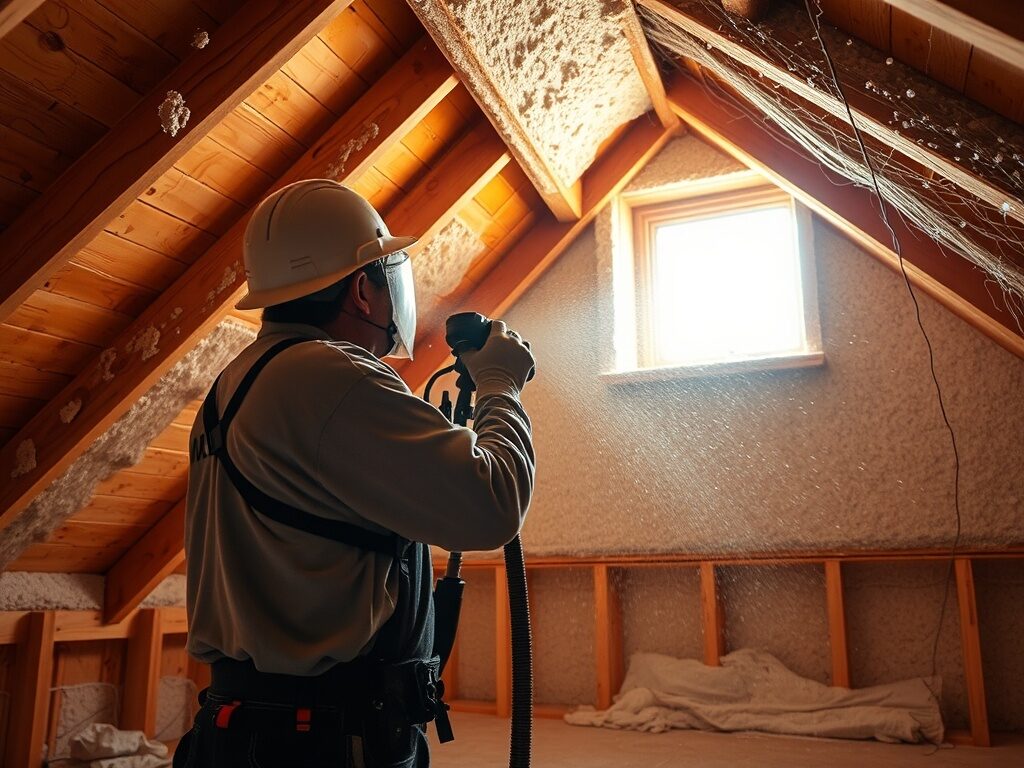
Seminole and the surrounding counties sit in IECC Climate Zone 3B, which sets minimum code targets of R-38 for attics and R-13 for walls. A lot of older housing stock in this region predates consistent energy code enforcement, which means the starting point for a cost estimate here is often "how much of this home currently has no meaningful insulation at all" rather than "how much to top off an already-decent attic." That tends to push project scope — and therefore cost — toward the higher end of national ranges for older homes, but also toward a faster payback, since there's more inefficiency to correct.
Local, third-party project-cost trackers show completed spray foam jobs in the Lubbock area averaging in the low-$2,000s for smaller-scope work — consistent with an attic top-up or a single-room project rather than a full-home retrofit, which reinforces how much scope changes the number. We'd encourage treating any single local average like that as a data point, not a quote — the honest way to know your number is a walk-through of your specific attic, walls, and current insulation condition, not a regional average.
West Texas' arid, sun-heavy climate also shifts which application area delivers the most value per dollar. With attic temperatures on a 95°F+ day climbing well past 130°F, attic and roofline insulation is almost always the highest-leverage place to start — it's typically the largest cost-per-square-foot opportunity and the most accessible without opening finished walls. For metal buildings, ag structures, and pole barns common in this service area, cost per square foot runs differently again due to steel condensation control needs — see our metal building insulation page for that scope.
Is Spray Foam Worth the Cost? ROI & Payback
The upfront number is only half the financial picture. The other half is how long it takes that upfront cost to pay for itself in lower energy bills — and how long the investment keeps paying after that.

Industry payback data consistently shows a wide range — roughly 2 to 15 years — because payback is a function of local climate severity as much as it's a function of the insulation itself. Extreme climates with heavy heating or cooling loads see faster payback because there's more energy waste being corrected per year; mild climates see slower payback because there's less waste to begin with. Seminole's Zone 3B profile — a heavy cooling season plus real winter heating demand — sits firmly on the fast-payback side of that range, which lines up with the DOE's "up to 20%" and ENERGY STAR's "up to 15%" combined heating/cooling savings figures we've documented in detail in our energy savings from insulation article.
It helps to separate two different numbers that get conflated in a lot of marketing material: the percentage savings figure (11–20%, per DOE and ENERGY STAR) and the dollar payback period. The percentage tells you how much smaller your energy bill gets; the payback period tells you how many years of that smaller bill it takes to offset the project cost. A $4,500–$7,000 attic project recovered through $250–$700+ a year in documented savings lands squarely in that 3–7 year window for a home starting from genuinely under-insulated conditions — which describes a meaningful share of the Permian Basin's older housing stock. The Building America Solution Center's attic air sealing and insulation checklist, a DOE-affiliated technical resource, walks through the same inspection points a contractor should be checking before quoting your project.
What that means in practical terms: spray foam's higher upfront cost isn't a straight loss compared to fiberglass — it's a faster-compounding investment in a climate like this one. A home that spends $2,400–$3,600 a year on heating and cooling and captures even the conservative end of that savings range recovers a meaningful share of a $4,500–$7,000 attic project within the first several years, then keeps the full savings for decades after.
Financing & Tax Credits in 2026
This is the section where a lot of older insulation content online is now out of date — so let's be precise about the current 2026 status.
The federal insulation tax credit has expiredThe federal Energy Efficient Home Improvement Credit (Section 25C), which covered 30% of insulation cost up to $1,200/year, expired for installations after December 31, 2025. It is not available for insulation work completed in 2026. If you've seen content elsewhere claiming this credit is "currently available," that information is out of date — even ENERGY STAR's own federal tax credit page now reflects the wind-down.
That expiration matters for how you should budget a 2026 project: where a homeowner in 2024 or 2025 could realistically knock $1,200 off a $4,500–$7,000 attic project, that's no longer a lever available at the federal level. It doesn't change the underlying cost-per-square-foot numbers in this guide, but it does mean the net cost after incentives is closer to the gross cost than it was two years ago — which is exactly why the alternatives below are worth checking before you budget a project.
With that federal credit gone, here's what's still available to reduce the cost of a 2026 insulation project:
| Option | Who it's for |
|---|---|
| DOE Weatherization Assistance Program (WAP) | Income-qualified households (at or below 200% of poverty guidelines) — free weatherization including insulation, administered at the state level |
| Contractor financing | Many spray foam companies partner with lenders (Hearth, EnerBank, Synchrony-type networks) for monthly-payment plans |
| Personal loans | Fixed-rate, lump-sum, no home equity required |
| Home equity loan / HELOC | Homeowners with equity — typically lower rates, higher limits than personal loans |
| Utility rebates | Varies by provider; much of Gaines/Terry/Yoakum county is served by rural electric co-ops without standardized rebate programs — check directly with your provider |
Income-qualified? Start hereThe DOE Weatherization Assistance Program is the nation's largest residential energy-efficiency program and has helped over 7.2 million households since 1976, with participants saving an average of $372+ per year. In Texas, it's administered through the Texas Department of Housing and Community Affairs.
DIY vs. Professional Installation Cost
DIY closed-cell spray foam kits run roughly $0.75–$2.00 per square foot for material alone, which can look like a significant discount against a $3.00–$5.00 professional installed price. Before choosing that route, it's worth understanding what that price difference actually reflects.
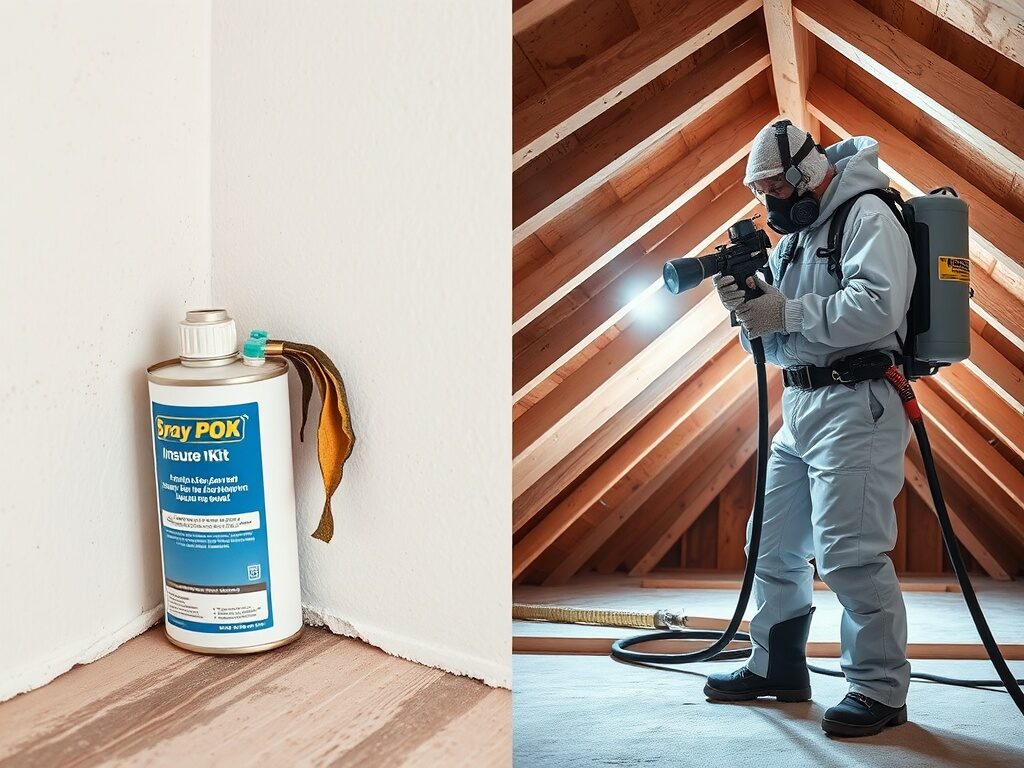
DIY kits make sense for
- Small gaps around pipes, wiring, and rim joists
- Sealing an attic hatch or single penetration
- Touch-up work on an existing installation
Professional installation is needed for
- Full attic, wall, or crawl space coverage — consistent thickness is hard to control by hand
- Any closed-cell application over a few dozen square feet (equipment and PPE requirements)
- Correct application ratio — improperly mixed foam off-gasses and under-performs its rated R-value
Labor typically makes up 30–50% of a professional quote, which explains the price gap — but that labor also includes proper mixing ratios, even thickness application, and the equipment needed to actually hit the manufacturer's rated R-value. A miscalibrated DIY application can under-perform its label significantly, which erases the savings math entirely.
Attic, Walls, or Crawl Space — Where to Spend First
If your budget doesn't stretch to a full whole-home retrofit in one project, the order you tackle areas in matters as much as the total spend.
Homes with condition issues — pest damage, moisture, or badly settled existing insulation — sometimes need remediation before any new spray foam goes in, which changes both the sequencing and the total cost. Our when to replace insulation guide walks through those warning signs in detail. For a broader seasonal-prep view of how these upgrades fit together, see preparing for Texas summers, and if you're comparing benefits beyond just the price tag, our spray foam insulation benefits article covers the comfort, noise, and durability side of the decision.
How to Get an Accurate Quote
Because scope changes the price so dramatically, the fastest way to get a number you can trust is to make sure a contractor is evaluating the same things every time. Before your estimate:
- Confirm which areas are included — attic only, walls, crawl space, or a combination
- Ask whether existing insulation needs to be removed first, and whether that's priced separately
- Get the foam type specified in writing (open-cell vs. closed-cell) — not just "spray foam"
- Ask about the applied thickness and resulting R-value, not just a flat square-foot price
- Confirm whether the quote includes any minimum job fee
We serve Seminole, Andrews, Lubbock, Midland, Odessa, and the surrounding Gaines, Terry, and Yoakum County communities, and every estimate starts with a walk-through of your specific attic, walls, and current insulation condition — not a generic national number. If your existing insulation shows signs of age, pests, or moisture damage, our when to replace insulation guide covers what that adds to a project scope before you spray foam over it.
Frequently Asked Questions
How much does spray foam insulation cost per square foot?
Open-cell spray foam runs $1.50 to $3.50 per square foot installed, and closed-cell spray foam runs $3.00 to $5.00 per square foot installed, based on 2026 national industry cost data. Closed-cell costs more because it delivers roughly double the R-value per inch and adds a vapor barrier.
How much does it cost to spray foam a 1,500 sq ft attic?
A typical 1,500 sq ft attic costs $3,500 to $5,000 with open-cell foam, or $4,500 to $7,000 with closed-cell foam, depending on thickness and whether old insulation needs to be removed first.
How much does it cost to spray foam an entire house?
A whole-home retrofit on an existing 2,000 sq ft house typically runs $4,500 to $14,000, depending on how many areas are included. New construction is often cheaper per square foot at $14,100 to $30,500 for a 2,000-2,500 sq ft home, because wall cavities are open and accessible before drywall goes up.
Is the federal tax credit for spray foam insulation still available in 2026?
No. The federal Energy Efficient Home Improvement Credit (Section 25C), which covered 30% of insulation cost up to $1,200 per year, expired for installations after December 31, 2025, confirmed directly on irs.gov. It is not available for 2026 projects.
What financing options are available for spray foam insulation in 2026?
With the federal tax credit expired, options include the DOE Weatherization Assistance Program for income-qualified households, contractor financing partnerships, personal loans, home equity loans or HELOCs, and utility rebate programs where available.
Is spray foam insulation worth the extra cost compared to fiberglass?
For most West Texas homes, yes. Spray foam costs 60-80% more upfront than fiberglass, but it lasts 80-100+ years without settling, versus 15-20 years for fiberglass, and it adds continuous air sealing that fiberglass doesn't provide. In West Texas' extreme Zone 3B climate, that combination typically produces a 3-7 year payback period.
How long does spray foam insulation take to pay for itself?
In extreme climates like West Texas, typical payback is 3 to 7 years. In milder climates, payback tends to run 8 to 15 years, because there's less energy waste to correct in the first place. Spray foam continues delivering savings for decades after that payback period.
Does removing old insulation add to the cost?
Yes. Removing existing fiberglass, cellulose, or contaminated insulation before installing spray foam typically adds $1.00 to $2.50 per square foot, depending on accessibility and how much material needs to be removed.
Is DIY spray foam insulation cheaper than hiring a professional?
DIY closed-cell kits cost roughly $0.75 to $2.00 per square foot for material alone, versus $3.00 to $5.00 installed by a professional. DIY kits are appropriate for small gaps and sealing work, but full attic, wall, or crawl space coverage requires equipment and mixing precision that's difficult to replicate by hand, and improperly applied foam can significantly under-perform its rated R-value.
Why do spray foam quotes vary so much between contractors?
Most variation comes from scope differences, not pricing dishonesty: one quote might cover attic-only open-cell foam while another covers a whole-home closed-cell application. Always confirm the exact areas covered, foam type, and applied thickness before comparing two quotes directly.
Does spray foam insulation cost more in West Texas than the national average?
Per-square-foot pricing is generally in line with national ranges, but total project scope often runs larger here because much of the region's older housing stock predates consistent energy code enforcement and needs more comprehensive coverage to reach current Zone 3B minimums.
The Bottom Line
Spray foam insulation cost isn't a single number — it's a range shaped by foam type, project scope, and your home's current condition. For most Seminole-area homes, that means somewhere between $1.50 and $5.00 per square foot installed, with a typical attic project landing in the $3,500–$7,000 range. The federal tax credit that used to soften that number is gone for 2026, but financing and income-qualified programs still exist — and in a climate this demanding, the payback math still works out faster than almost anywhere else in the country.
Want an Exact Number for Your Home?
Skip the national averages. We're based in Seminole and can walk your specific attic, walls, or crawl space to give you a real, scope-based quote.
Get a Free Estimate from Desert Spray Foaming