Common Spray Foam Insulation Myths — and the Truth
Toxic forever. Rots your roof. Voids your mortgage. If you've searched "spray foam insulation problems" or "spray foam regrets," you've run into these claims. Here's what's actually true, sourced from the EPA, DOE, ICC building code, and manufacturer warranty documents — not marketing copy from either side.
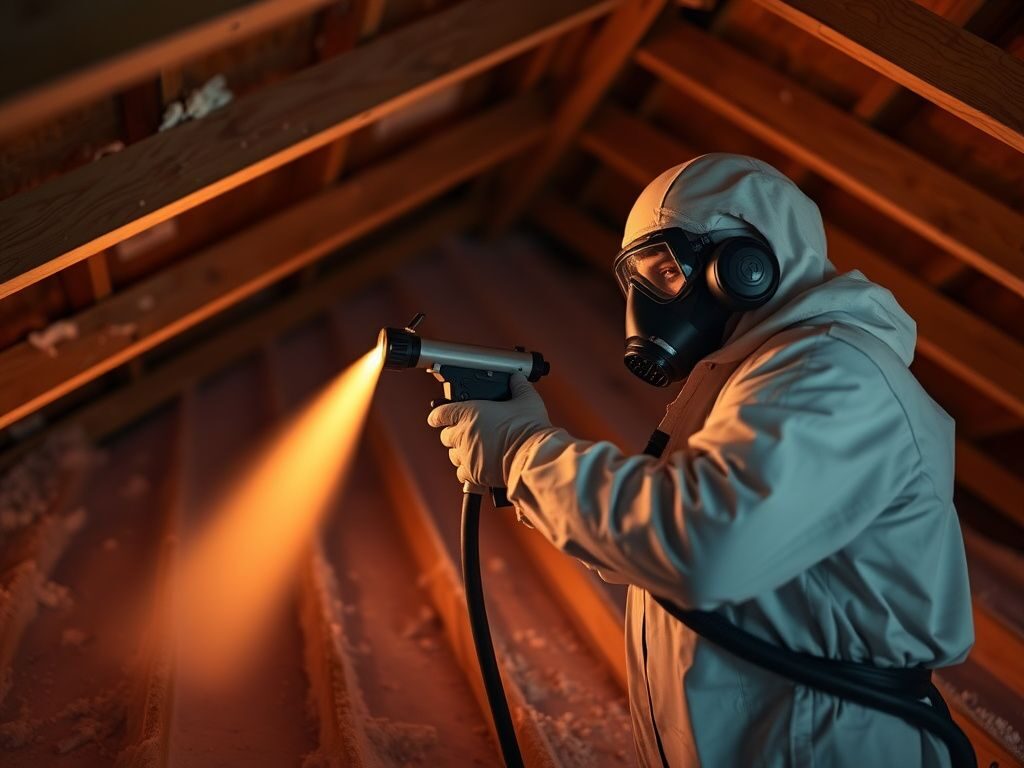
If you're researching spray foam insulation, you've probably run into two completely different internet experiences. One side tells you it's a miracle product that pays for itself, lasts forever, and solves every insulation problem you have. The other side tells you it off-gasses toxic fumes indefinitely, rots roof decks from the inside out, and will tank your ability to sell or refinance your home.
Both extremes are wrong, and both get repeated so often that they've calcified into "common knowledge." The truth is more useful than either version: spray foam insulation has real, well-documented risks — almost all of which trace back to improper installation or the wrong foam type for the assembly, not the material itself. It also has real, well-documented benefits that hold up under EPA, DOE, and building-code scrutiny, not just industry marketing.
This guide walks through the myths we hear most often — about safety, moisture, fire code, mortgages, DIY kits, and durability — and lines each one up against the actual source documents: EPA guidance, OSHA and NIOSH occupational data, DOE/ENERGY STAR figures, the International Code Council's thermal and ignition barrier requirements, and shingle manufacturers' own warranty terms. If you're trying to decide whether spray foam is right for your West Texas home, shop, or pole barn, this is the version without the sales pitch on either side.
Key Takeaways
- Per EPA guidance, off-gassing concerns are concentrated in the first 24–72 hours after spraying. Properly cured foam is chemically inert.
- Documented "roof rot" cases almost always trace to open-cell foam used without a vapor strategy in cold/humid climates — not to spray foam broadly, and rarely relevant to arid West Texas.
- Shingle warranty impact depends entirely on the manufacturer — GAF and CertainTeed permit spray foam under stated conditions; Atlas requires airflow provisions. Read your specific warranty.
- The "mortgage problem" is a documented U.K. lending issue, not a U.S. one — it gets misapplied to American homes online.
- Building code requires a thermal or ignition barrier over all spray foam — it is code-legal everywhere, when installed correctly, not a fire loophole.
Myth 1: "Spray Foam Is Toxic — Forever"
This is the myth with the most grain of truth buried in it, which is exactly why it spreads so well. During application, spray polyurethane foam (SPF) chemicals — particularly isocyanates like MDI — genuinely do release vapors that require ventilation and personal protective equipment. OSHA's isocyanate guidance is explicit that installers need respiratory and skin protection, and that people who become sensitized can develop asthma-like reactions. That part of the myth is accurate.
Where it goes wrong is the leap from "the installation process involves chemicals that need careful handling" to "the finished product in my house is toxic indefinitely." According to EPA's own guidance on potential chemical exposures from spray polyurethane foam, the concern window is the first 24–72 hours after application, while the foam is curing. Once fully cured, SPF is an inert plastic polymer — it isn't reacting, off-gassing, or releasing the compounds that made ventilation necessary during the spray itself.
Spray foam insulation off-gasses toxic fumes into your home indefinitely, even years after installation.
EPA guidance places off-gassing concern in the first 24–72 hours of cure. Once fully cured, SPF is an inert, stable plastic. Risk concentrates almost entirely in improperly mixed or off-ratio applications — a reason to hire a certified installer, not to avoid the product.
The real risk factor the research keeps pointing to is the 1:1 mix ratio. If the two spray foam components aren't mixed in correct proportion by the rig, some unreacted material can remain in the cured foam, leading to ongoing off-gassing and a lingering odor. That's a certified-installer problem — precision plural-component spray rigs, calibrated daily, are what prevent it. It's also the single strongest argument against DIY kits, which we cover in Myth 4. The EPA's indoor air quality guidance on VOCs is a useful general reference if you want to understand how off-gassing works across building materials broadly, not just spray foam.
Myth 2: "Spray Foam Always Traps Moisture and Rots Your Roof"
This one has real documented cases behind it, which is why it's taken seriously rather than dismissed. There are homeowner accounts — including a widely cited 2023 investigative piece on Vermont homes — describing roof decking that had rotted to dust after open-cell foam installation, and a 2005 New Jersey lawsuit against a foam manufacturer over moisture damage that settled before trial.
What those cases have in common is a specific technical failure: open-cell spray foam is vapor-permeable (it doesn't block moisture movement), applied directly to a roof deck in a cold or humid climate without an accompanying vapor-control strategy. Indoor moisture-laden air diffuses through the open-cell foam and condenses against the cold roof sheathing on the other side, where it has nowhere to go — and repeated condensation cycles rot wood over years. This is a well-documented building-science failure mode, not a mystery.
Any spray foam applied to a roof deck will eventually trap moisture and rot the wood underneath.
Documented roof-rot cases specifically involve open-cell foam without a vapor-control plan, concentrated in cold/humid climates. Closed-cell foam acts as its own vapor retarder at 1.5″+ thickness, and West Texas' arid Zone 3B climate carries far lower moisture-diffusion risk than the Northeast or Pacific Northwest cases in the reporting.
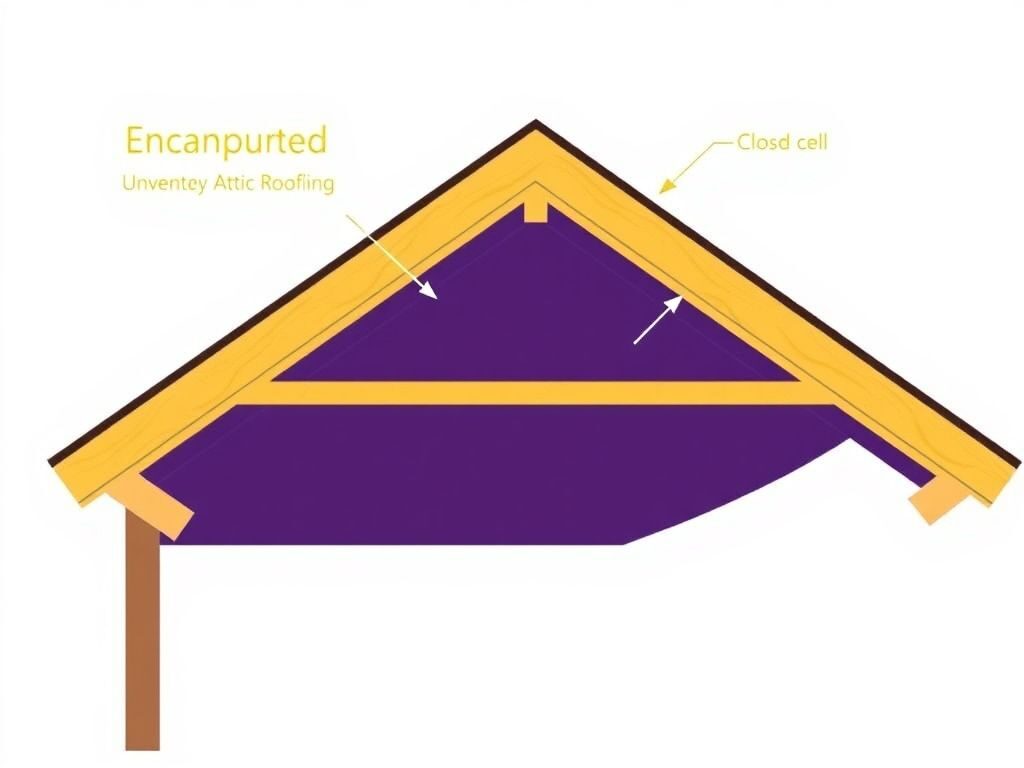
The fix isn't "never spray foam a roof deck" — it's "match the foam type and design to the climate and assembly." That's the same lesson covered in our open-cell vs. closed-cell comparison: closed-cell foam's vapor-retarder property specifically exists to prevent this failure mode, and a qualified installer designs the assembly around your climate zone rather than defaulting to whatever's cheapest. West Texas' dry, low-humidity air also fundamentally changes the moisture math compared to the humid or freeze-thaw climates most roof-rot reporting comes from — there's simply far less atmospheric moisture available to diffuse and condense in the first place.
The actual lesson from these casesEvery documented roof-rot failure traces back to the wrong foam choice for the climate and assembly, installed without a vapor plan — which is precisely why the SPFA and building-science community publish detailed climate-zone guidance rather than a one-size-fits-all recommendation.
Myth 3: "Spray Foam Automatically Voids Your Roof Shingle Warranty"
This myth persists because it's sometimes true — just not universally, and the manufacturer-by-manufacturer reality gets flattened into a blanket "never do it" warning online.
Shingle manufacturers set their own policies, and they genuinely differ. CertainTeed's warranty terms list spray foam applied to the roof deck as an acceptable insulation method. GAF's technical guidance similarly permits below-deck SPF insulation without voiding shingle coverage. TAMKO's technical notice on below-deck spray foam insulation lays out specific conditions under which their shingle warranty remains valid with SPF present. Atlas is the strictest of the major manufacturers — their warranty can be voided by incorrectly installed under-deck spray foam specifically because it can block the eave-to-ridge airflow their shingle system depends on, but they explicitly approve spray foam installations that maintain that airflow path with baffles.
| Manufacturer | Spray foam on roof deck |
|---|---|
| CertainTeed | Listed as an acceptable insulation method under warranty terms |
| GAF | Shingle warranty remains valid with SPF on the roof deck per technical guidance |
| TAMKO | Valid under stated conditions per their below-deck SPF technical notice |
| Atlas | Requires eave-to-ridge airflow provisions (baffles); can void if installed incorrectly |
The one-sentence version: check your specific shingle manufacturer's warranty terms before roof-deck spray foam, not a forum post about a different manufacturer's policy. This is exactly the kind of detail a properly qualified installer should be walking you through before your project starts, and it's part of why we look at the whole assembly — roof, attic, and insulation plan together — rather than quoting insulation in isolation.
Myth 4: "DIY Spray Foam Kits Save Money and Work Just as Well"
DIY spray foam kits are real products that work for small, well-defined jobs — sealing a rim joist, a handful of penetrations, a small crawlspace. The myth is that they scale to whole-attic or whole-building jobs as a cheaper substitute for professional installation.
A DIY spray foam kit gets you the same result as a professional install for a fraction of the price.
DIY kits run $0.80–$1.80 per board foot in material alone, with no calibrated mixing equipment, no warranty, and no insurance backing if the foam goes off-ratio — which produces sticky, ineffective, hard-to-remove foam that a homeowner often can't diagnose until it's already a problem.
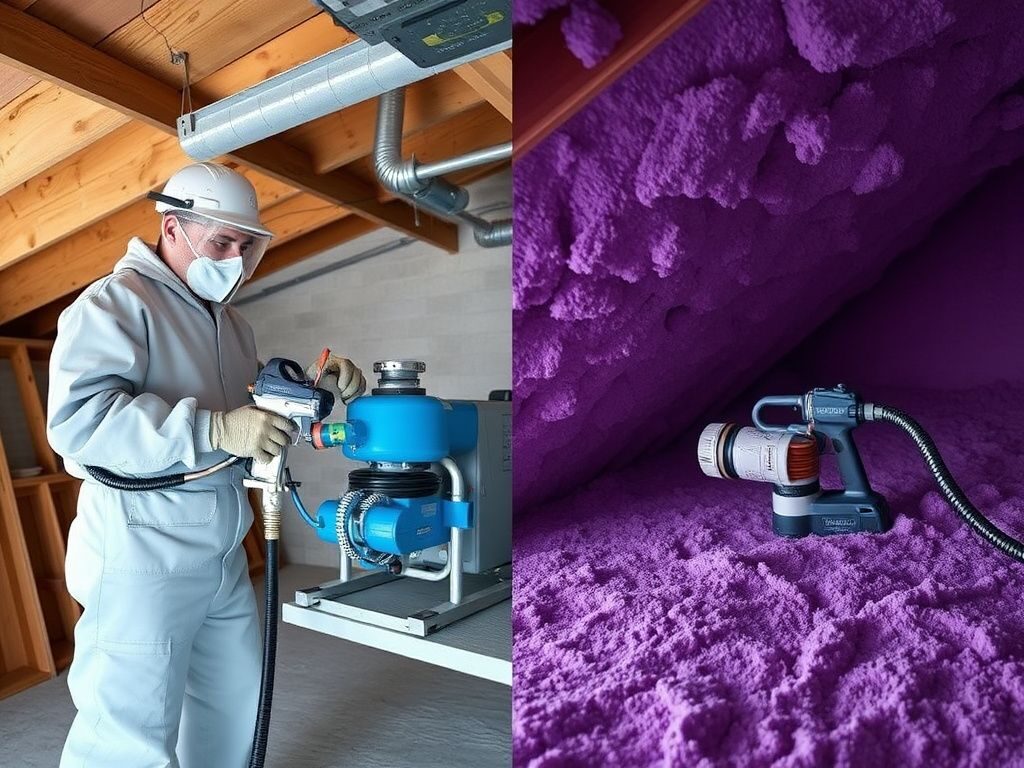
The core problem is the same off-ratio issue from Myth 1, but with fewer safeguards. Professional rigs precisely mix and control the two-component reaction; DIY kits rely on the operator getting temperature, pressure, and technique right on a first attempt, on a job they've never done before. When it goes wrong, the foam can stay sticky, fail to expand or cure properly, and require full removal and replacement — at the homeowner's expense, since DIY kits carry no installation warranty.
| DIY kit | Professional installation | |
|---|---|---|
| Material cost per board foot | $0.80–$1.80 | $1.30–$5.00 (includes labor) |
| Mix-ratio control | Manual, operator-dependent | Calibrated equipment, daily-checked |
| Workmanship warranty | None | Standard on most professional jobs |
| Removal/redo cost if off-ratio | Homeowner's full expense | Covered under warranty terms |
| Practical scale | Small, simple jobs (<500 sq ft) | Any size, including whole-building |
None of this means DIY kits are bad products — they're the right tool for a genuinely small job. The myth is specifically the idea that they're a cost-effective substitute for professional installation on a whole attic, wall system, or metal building. For anything beyond a single kit's realistic coverage, the math and the risk both favor a certified installer.
Myth 5: "Spray Foam Will Cause Mortgage or Insurance Problems"
This is one of the most-repeated myths online, and it's a case of geography getting lost in translation. There is a well-documented spray foam mortgage problem — in the United Kingdom. U.K. lenders and surveyors have flagged that spray foam applied directly to a roof deck can hide the roof structure from inspection, making it harder for a mortgage surveyor to assess the roof's condition, and that's led to real difficulty remortgaging or selling U.K. homes with roof-deck spray foam.
Homes with spray foam insulation are hard to mortgage, refinance, or insure.
The documented lending problem is specific to the U.K. mortgage-surveying process. There's no equivalent pattern in U.S. mortgage underwriting — the concern gets circulated online without the "U.K." qualifier attached, creating the false impression it's a nationwide American issue.
That's a real, specific problem — for U.K. homeowners. It gets repeated on American forums and social media without the "U.K." qualifier, which is how it turns into a blanket "spray foam causes mortgage problems" claim that doesn't reflect the U.S. market. If you're financing or refinancing a West Texas property with spray foam insulation, this isn't a documented pattern here the way it is across the Atlantic — though as with any major building system, it's still reasonable to keep documentation of who installed it, what type was used, and where, in case a future buyer's inspector has questions.
Myth 6: "Spray Foam Settles and Loses R-Value Over Time, Just Like Other Insulation"
This myth actually inverts the truth. Settling and R-value loss over time is a documented, well-understood characteristic of fiberglass batt and blown-in insulation — not spray foam. Fiberglass batts commonly sag and compress over 15–20 years, opening gaps around framing that reduce effective coverage even where the material is still technically present. Blown cellulose can settle 10–20% over time, which is why it sometimes needs a top-up.
Spray foam behaves differently because of how it cures: once fully expanded and set, it's a rigid or semi-rigid closed structure bonded to the substrate — it doesn't compress under its own weight or shift out of position the way loose-fill or friction-fit batt material can.
Effective R-Value Over Time (illustrative, based on documented settling behavior)
None of this makes fiberglass or cellulose bad products — both meet code and deliver real savings when properly installed, and we cover the honest tradeoffs in our energy savings from insulation article. But the specific myth that spray foam settles and degrades "just like everything else" gets the comparison backwards; durability is actually one of spray foam's most defensible, well-documented advantages.
Myth 7: "Spray Foam Is a Fire Hazard and Might Not Even Be Code-Legal"
Spray polyurethane foam is a combustible plastic material, and that fact gets stretched into "it's dangerous to have in your home" or "it's not really code-compliant." Neither conclusion follows from the premise.
Building codes address this directly and specifically, and spray foam has been legal, code-recognized construction material for decades under these rules. Per the International Code Council's thermal barrier requirements, foam plastic insulation — including SPF — must be separated from occupied interior space by a thermal barrier, typically ½-inch drywall, which slows heat transfer and delays ignition during a fire. In attics and crawlspaces that are only entered for utility service (not regularly occupied), code requires a lighter-weight ignition barrier instead — options include 1½-inch mineral fiber insulation, ¼-inch wood structural panel, or ⅜-inch gypsum board, per SPFA technical guidance.
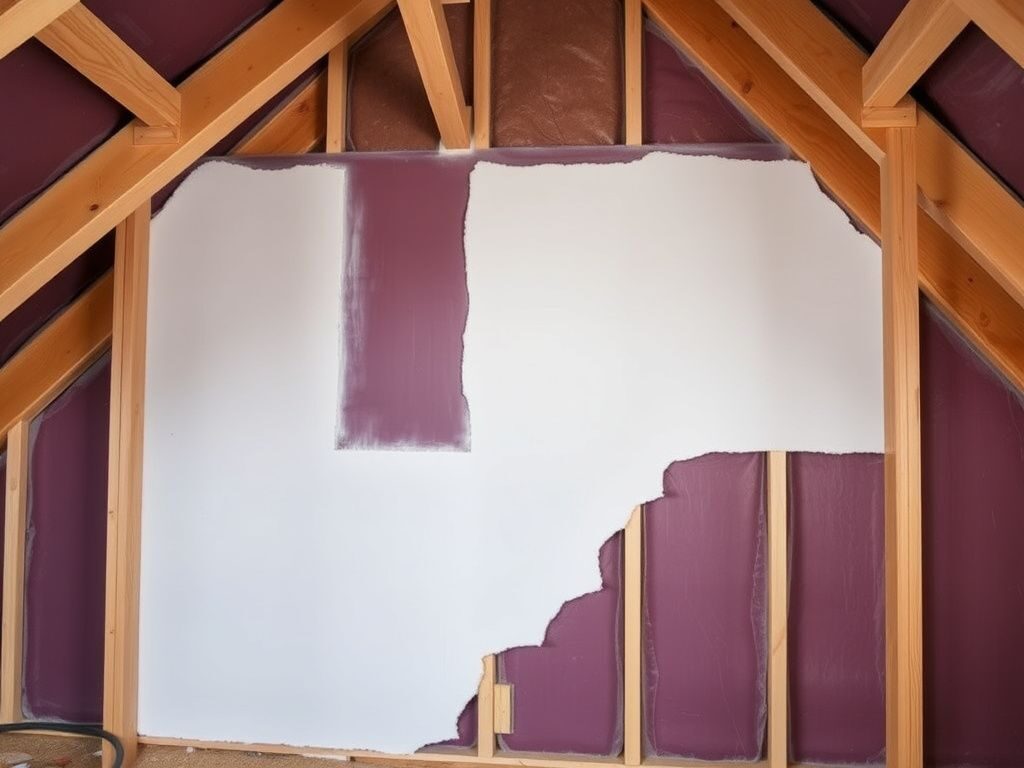
This isn't a loophole or a gray area — it's a standard, well-established building-code requirement that any licensed installer already builds into the job. The "fire hazard" myth conflates the raw material's combustibility (true of most foam plastics, and precisely why the barrier requirement exists) with the finished, code-compliant assembly being unsafe (false, when installed to spec). A qualified installer isn't skipping a safety step by using spray foam — they're following the same code framework that's governed foam plastic insulation for years.
Myth 8: "More Attic Ventilation Always Beats Insulation for Heat Control"
This one is conventional wisdom that predates spray foam and doesn't quite apply to it. The instinct is understandable — a hot attic feels like a ventilation problem, so the fix must be more vents, bigger vents, a powered attic fan. Ventilation does have a real job in a traditional vented attic: it manages roof-deck moisture and slows shingle degradation. But it isn't a substitute for adequate insulation and air sealing at the ceiling plane, and it does very little to cool the living space below an under-insulated attic floor.
Spray foam changes the equation entirely by enabling a different assembly: the unvented, encapsulated attic, where closed-cell foam is applied directly to the underside of the roof deck instead of laid across the attic floor. That moves your attic — and any ductwork or HVAC equipment inside it — into the home's conditioned thermal envelope, instead of leaving it exposed to attic temperatures that can exceed 130°F on a West Texas summer day. This isn't a workaround for skipping ventilation; it's a documented, code-recognized building science approach with a different ventilation logic than a traditional attic.
Bottom line"More ventilation" and "more insulation" solve different problems. If your attic is properly insulated and air-sealed — whether vented or unvented-encapsulated — ventilation stops being the lever that determines comfort downstairs.
Myth 9: "Spray Foam Is Really Just for Cold Climates — It Doesn't Do Much for Heat"
This myth gets it backwards for a dry, hot climate like West Texas. R-value resists heat flow in both directions — it holds outdoor summer heat back exactly as effectively as it holds indoor winter heat in. The idea that spray foam is a "winter product" tends to come from cold-climate marketing and case studies, simply because that's where a lot of the original spray foam retrofit market developed.
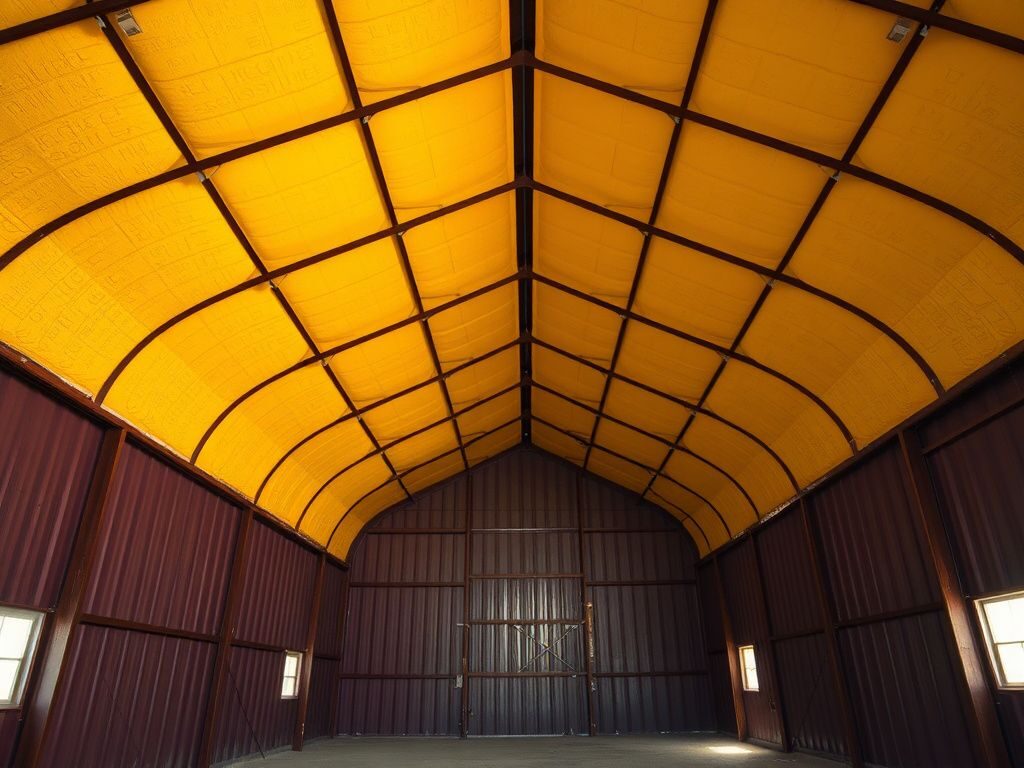
In Seminole and the surrounding Permian Basin, the challenge cuts the other way: sustained cooling-dominated demand, extreme single-day temperature swings, and severe radiant heat load through metal roofs and attic decking. Spray foam's air-sealing effect — on top of its R-value — is arguably more valuable here than in a mild climate, because a bigger share of the unwanted heat gain in this region moves through air leaks and radiant roof surfaces rather than through insulated cavities alone. Metal buildings and pole barns see the effect most dramatically: closed-cell foam bonded directly to steel eliminates the air gaps that cause both radiant heat gain and dew-point condensation from day/night temperature swings on bare metal.
Myth 10: "All Spray Foam Is the Same — the Type Doesn't Matter"
Most of the myths above trace back to this one root misunderstanding: treating "spray foam" as a single, interchangeable product rather than two materials — open-cell and closed-cell — with genuinely different properties, price points, and correct applications.
| Open-cell | Closed-cell | |
|---|---|---|
| R-value per inch | R-3.5–3.9 | R-5.6–8.0 |
| Vapor barrier | No (vapor-permeable) | Yes, at 1.5″+ thickness |
| Structural rigidity | No | Yes — adds racking strength |
| Best fit | Interior walls, dry-climate attics | Roof decks, metal buildings, below-grade |
| Cost | Lower | Higher |
A qualified installer doesn't default to one type everywhere — they match the foam to the assembly, the climate, and the moisture risk, exactly as covered in our full open-cell vs. closed-cell spray foam guide. Nearly every myth in this article — roof rot, warranty voids, fire concerns — gets sharper and more accurate once you're evaluating "which foam, in which assembly" instead of "spray foam" as one undifferentiated product.
Why the Myths Persist — and What Actually Predicts Regret
Reviewing the documented cases behind these myths — lawsuits, forum complaints, investigative reporting — a consistent pattern emerges: regret and real damage cluster around improper installation or the wrong foam type for the assembly, not the material itself. That's also exactly what our own field experience and customer research bear out, and it matches the real, well-documented benefits of spray foam insulation when the job is done right. Homeowners who hire an experienced, licensed, insured installer who correctly specs open-cell versus closed-cell for each part of the building rarely end up in the "spray foam regret" conversation at all.
Getting an Honest Answer for Your West Texas Property
Every one of these myths has a real, documented kernel of truth — that's what makes them durable. But the details that actually determine your outcome are specific to your building: which assembly, which climate exposure, which foam type, and which installer. A metal shop in Andrews County has a completely different moisture and heat-gain profile than a 1990s ranch house in Midland, and both are different again from a below-grade foundation wall.
That's the conversation we have on every estimate — not a generic pitch, but a look at your specific roof, walls, and building type to determine whether spray foam insulation is the right call, which type belongs where, and what the realistic cost and timeline look like. We serve Seminole, Andrews, Lubbock, Midland, Odessa, and the surrounding Permian Basin communities. If it's been a while since your attic was last checked, our guide on when to replace insulation covers the warning signs, and if an older insulation job in your home or shop needs to come out before new material goes in, our insulation removal team handles that as part of the same project.
Frequently Asked Questions
Is spray foam insulation actually safe once it's cured?
Yes. EPA guidance places off-gassing concern in the first 24–72 hours of the curing process. Once fully cured, spray foam is a stable, inert plastic. The real risk factor is improper mixing (off-ratio application) during installation, which is why professional, calibrated equipment matters.
Does spray foam insulation really rot roofs?
Documented roof-rot cases specifically involve open-cell foam applied without a vapor-control strategy in cold or humid climates, where indoor moisture condenses against the cold roof deck. Closed-cell foam acts as its own vapor retarder, and West Texas' arid climate carries substantially lower moisture-diffusion risk than the regions most roof-rot cases come from.
Will spray foam insulation void my roof shingle warranty?
It depends on the shingle manufacturer. CertainTeed, GAF, and TAMKO all permit spray foam on the roof deck under stated conditions. Atlas requires eave-to-ridge airflow provisions (baffles) to avoid voiding coverage. Always confirm against your specific manufacturer's current warranty terms before installation.
Are DIY spray foam kits a good way to save money?
For small, simple jobs under about 500 square feet, they can work. For a whole attic, wall system, or building, DIY kits carry meaningfully higher risk of off-ratio application, no workmanship warranty, and full homeowner liability for removal and redo if something goes wrong — costs that typically erase the upfront savings.
Will spray foam insulation cause problems getting a mortgage or insurance in the U.S.?
There's no documented pattern of this in U.S. mortgage underwriting. The well-known spray foam mortgage difficulty is specific to the United Kingdom, where roof-deck spray foam can complicate a lender's structural survey. That U.K.-specific issue frequently circulates online without the country qualifier attached.
Does spray foam settle or lose R-value over time like other insulation?
No — this is actually one of spray foam's clearest advantages. Fiberglass batts commonly sag and compress over 15–20 years, and blown cellulose can settle 10–20%. Properly installed spray foam is documented to hold its R-value for 80–100 years without settling, sagging, or losing effectiveness.
Is spray foam insulation a fire hazard?
Spray foam is a combustible plastic, which is why building code requires a thermal barrier (typically ½-inch drywall) between it and any occupied space, and an ignition barrier in attics/crawlspaces. This is a standard, decades-old code framework followed by every licensed installer — not a workaround or a gray area.
Is spray foam only useful in cold climates?
No. R-value resists heat flow in both directions, and spray foam's air-sealing effect is arguably more valuable in a hot, dry climate like West Texas, where sustained cooling loads, radiant roof heat, and large day-night temperature swings put continuous stress on the building envelope.
What's the real difference between open-cell and closed-cell spray foam, and why does it matter for these myths?
Open-cell runs R-3.5–3.9 per inch and is vapor-permeable; closed-cell runs R-5.6–8.0 per inch and acts as its own vapor barrier at sufficient thickness. Nearly every spray foam myth — roof rot, moisture, warranty voids — sharpens into an accurate, manageable risk once you're evaluating the correct foam type for the specific assembly rather than treating "spray foam" as one product.
What actually predicts whether someone regrets their spray foam insulation?
Across documented complaints, lawsuits, and field experience, regret traces almost entirely to improper installation or the wrong foam type for the assembly — not the material itself. Hiring a licensed, insured, experienced installer who correctly specs open-cell versus closed-cell per area is the single biggest factor in avoiding it.
The Bottom Line
Spray foam insulation myths persist because most of them started from a real, documented incident — a bad installation, a mismatched foam type, a U.K.-specific lending quirk — that then got generalized into a blanket warning without the qualifying details attached. Strip those details back out, cross-reference EPA, DOE, ICC code, and manufacturer warranty documents, and the picture that emerges is neither the miracle product nor the toxic hazard the internet argues about. It's a well-understood building material with a strong, code-compliant safety and durability record — when the right foam type is installed correctly for your specific building.
Get a Straight Answer for Your Property
No sales pitch on either extreme — just an honest look at your roof, walls, and building type to determine whether spray foam is right for you, and which type belongs where.
Talk to Desert Spray Foaming